
Monoculars for Wildlife and Birdwatching
Compare optical monoculars from Hawke, Vortex and ZEISS for birdwatching, wildlife, walks, travel and coastal viewing. The range runs from small pocket designs to larger models. Weigh magnification, lens size and field of view against the size and weight you are happy to carry and the way you plan to use your monocular.
Choosing a monocular
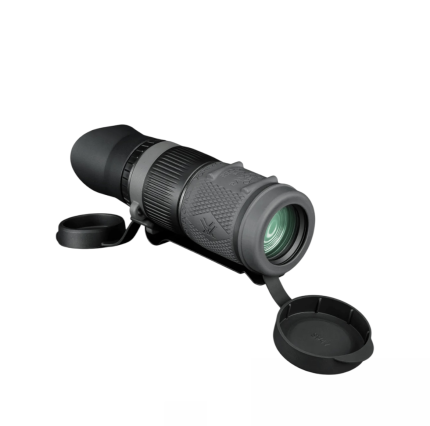
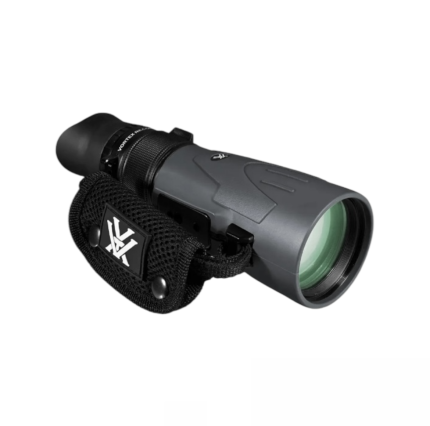
A monocular is a single-barrel optic that you hold to one eye. Smaller models slip easily into a bag with other kit, and some may fit in a coat pocket. That makes them handy on walks, when travelling or as a back-up to binoculars or a camera. Not every monocular here is pocket-sized, though. The range runs from small pocket designs to larger models such as the Vortex Recon 15x50, so check the size and weight of each model against how you intend to carry it.
It helps to start with where you will use it most:
- Walks and travel: look for the smallest, lightest body that you will happily carry every time. Lens size is only a rough guide to this, so compare the weight and dimensions of the models you are considering.
- Dawn, dusk and woodland: a larger objective lens gathers more light, but it generally means a bigger body.
- Distant detail: higher magnification shows more detail, but the view is harder to hold steady.
- Coast and open water: see the marine models below.
Magnification, lens size and field of view
Monoculars are described with two numbers, such as 8x25 or 7x42. The first number is the magnification. An 8x monocular makes a subject appear about eight times larger than it does to the naked eye. More magnification can reveal finer detail, but it also magnifies hand movement.
The second number is the diameter of the objective (front) lens in millimetres. A larger objective can gather more light, which may help early and late in the day. Brightness and clarity depend on the whole optical design, not just these two figures.
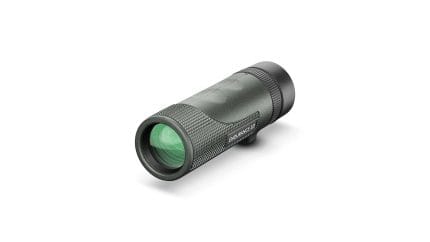
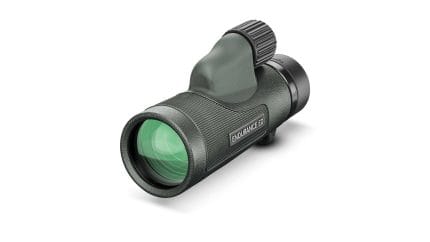
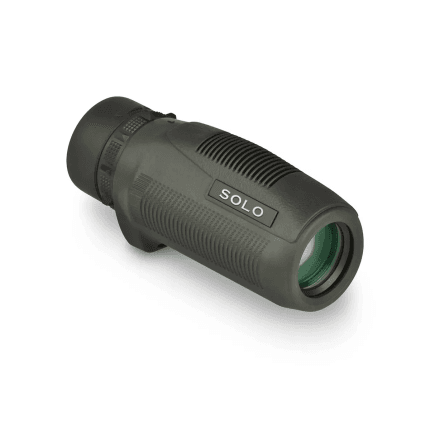
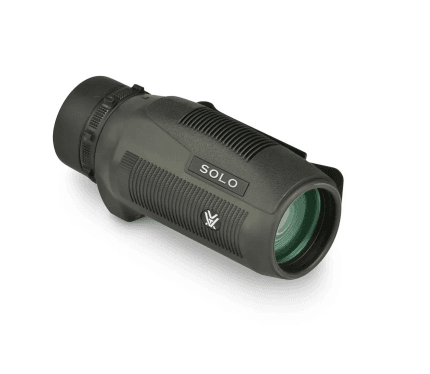
Comparing real models shows how the numbers trade off. The Hawke Endurance ED 8x25 and the Vortex Solo 8x25 share the same 8x magnification and 25 mm lens. The choice between them comes down to details such as field of view, close focus, handling and weight. The Zeiss 10x25 T* Victory Mono Pocket Monocular adds magnification and keeps a 25 mm lens. It suits you if you want more reach from a small optic and are comfortable with the extra magnification. The Hawke Endurance ED 8x42 keeps 8x magnification but moves up to a 42 mm lens. That larger objective can gather more light, but a 42 mm design is generally bulkier than a 25 mm one. Weigh the extra light-gathering against what you are happy to carry.
Why field of view matters
Field of view tells you how wide a scene you can see. It is usually listed in metres at 1,000 m or in degrees. A wider field makes it easier to pick up a bird quickly and stay with it as it moves through trees or across water. Field of view varies between designs even at the same magnification. When two models have matching numbers, compare their fields of view side by side.
Close viewing, handling and comfort
If you enjoy watching butterflies, dragonflies or birds on a nearby feeder, look at the close focus distance. This is the nearest point at which the monocular will give a sharp image.
Handling matters as much as the specification. Think about how the body sits in your hand, how easily you can reach the focus control and whether you can use it comfortably with one hand. Viewing with one eye also suits some people better than others. Many find it natural for quick looks, while others prefer two eyes for longer sessions. If you mostly watch from one spot for long stretches, it is worth comparing our binoculars too.
Coastal and marine viewing
If most of your viewing is along the coast or on the water, the range includes the Hawke Endurance ED Marine 7x42 Monocular and the Hawke Endurance ED Marine 7x42 Compass Monocular. Their 7x magnification is a step below the 8x and 10x models elsewhere in the range, and their 42 mm objective matches the Hawke Endurance ED 8x42. Magnification is the most obvious difference: 7x enlarges the scene a little less, while 8x brings distant detail a little closer. It is not the only thing to weigh, though. Compare the size, field of view and handling of each model as well, and think about which will best suit the way you use it.
Choosing between the two Marine models is simple. The Compass Monocular is the variant named for its compass, so look at that one if a compass would be useful to you. If not, the standard Marine Monocular offers the same 7x42 format. Compare the two listings side by side before you decide.
Frequently asked questions
Should I choose a monocular or binoculars?
Neither suits everyone. A monocular uses one eyepiece and many models are compact, which makes them easy to carry for quick looks. Binoculars use both eyes, and many people find two-eyed viewing more comfortable over long sessions, such as an afternoon in a hide. Sizes and weights overlap more than you might expect, because larger monoculars can be substantial, so compare the actual models you are considering. Think about how long you tend to watch and what you are happy to carry. If two-eyed viewing appeals, browse our binoculars.
What should I check if I wear glasses?
Look at eye relief, which is the distance from the eyepiece at which you can still see the full image. Longer eye relief generally makes it easier to see the whole view with glasses on. Adjustable eyecups that twist or fold down can also help. Fit still depends on the model, your frames and your face shape, so compare eye relief figures. Where possible, try the fit with your own glasses.
Can I use a monocular in rain or mist?
It depends on the model, so check what is stated for the one you are considering rather than assuming it applies across the range. The terms used for protection mean different things:
- Splash or shower resistance means the monocular is designed to cope with light rain, not to be dropped in water.
- A stated water-resistance rating tells you the specific level of protection a model is rated for. The rating describes particular conditions. It is not unlimited protection against water.
- Fog resistance refers to the inside of the optic resisting misting up. It does not stop rain or condensation forming on the outer lens surfaces, so a lens cloth is still worth carrying.
Can a monocular be used at night?
A conventional optical monocular works with the light that is available. Depending on the model and conditions, it can still be useful at dusk and dawn, but it cannot show you anything in complete darkness. Viewing in the dark needs a different technology:
- Digital night vision uses an electronic sensor. That sensor still needs usable visible or near-infrared light to form an image. Depending on the device and conditions, an infrared illuminator may be needed, because the sensor alone cannot see in total darkness.
- Thermal imaging detects the infrared radiation given off by people, animals and objects. It builds an image from the differences in that radiation between a subject and its surroundings. Because it does not rely on visible light, it can work in darkness.
If thermal imaging suits what you have in mind, see our thermal monoculars.
Can I use a monocular for things other than wildlife?
Yes. Optical monoculars are used for walking, travel, sporting events, picking out distant landmarks and watching activity along the coast. The two Hawke Endurance ED Marine 7x42 models are worth a look if you spend a lot of time by the sea or on the water. For any use, compare the size, weight, field of view and stated protection of the models you are considering.