Spotting Scopes
A spotting scope gives you a closer, more detailed view of distant subjects. It is useful for wildlife watching, birdwatching on estuaries and reservoirs, and coastal or landscape viewing. Most conventional spotting scopes use a single eyepiece rather than the two-eye view of binoculars. They are usually set up on a stable support, so they suit longer, settled observation. Compare straight and angled designs, zoom ranges and objective sizes below. If you prefer two-eye viewing on the move, browse our binoculars.
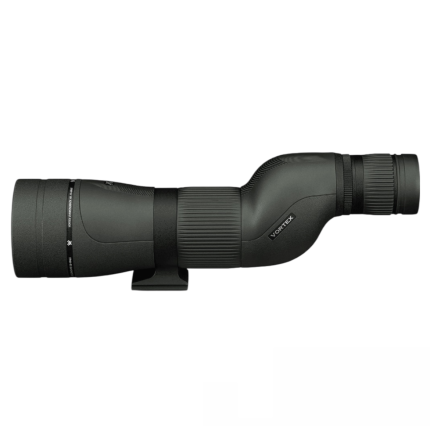
Choosing a spotting scope
Reading the numbers
Scope names usually follow a simple pattern. In a model described as 20-60x80, the first two figures give the zoom magnification range. The final figure is the diameter of the objective (front) lens in millimetres. These figures are a starting point. The sections below explain what to compare next.
Magnification and field of view
Higher magnification makes a subject look larger, but it does not automatically show you more detail. Steadiness matters more as you zoom in, because any movement is magnified too.
Field of view is the width of the scene you can see. Magnification and field of view are linked. On a zoom scope, the visible area typically narrows as you zoom in. That affects how easily you can find a bird or animal and follow it.
To compare field of view fairly between two scopes:
- Compare at the same magnification where you can. If both manufacturers give a field of view at an identical magnification, compare those two figures. The low ends of two zoom ranges are not necessarily the same setting. A 12-36x scope starts at 12x, for example, while a 20-60x scope starts at 20x.
- Be clear about which question you are asking. Comparing two scopes at the same magnification tells you which gives the wider view at that setting. Comparing each scope at its own lowest magnification tells you the widest view each one can offer, which matters when you are trying to find subjects. Both comparisons are useful, but they answer different questions. If the lowest magnifications differ, that difference may account for some of any gap in field of view, but the eyepiece and the scope's optical design play a part too. Without a like-for-like comparison, do not assume the whole difference comes from either the magnification or the design.
- Match the format. Manufacturers may give field of view as a width at a stated distance, such as metres at 1,000 m or feet at 1,000 yards. They may also give it as an angle in degrees. For width figures, both the unit and the reference distance must match before you can compare them directly. For example, a figure in metres at 500 m cannot be compared directly with a figure in metres at 1,000 m, even though both are in metres. Only compare figures given in the same format. Convert between formats only if you are confident the conversion is correct.
- Check that the figure exists. A listing may not state field of view at the setting you care about. If so, do not assume it matches a similar model.
Then think about how you will use the scope. If you often pick up moving subjects, a wider view at the low end of the zoom can make them easier to find, and you can zoom in once you are on target. If you mainly study one settled subject at a distance, the upper zoom range and a steady support matter more.
Objective size and total carrying weight
The objective diameter is the width of the front lens. A wider objective has greater potential to gather light. However, it does not guarantee a brighter or sharper view than another model. The result also depends on the scope's overall design, the magnification you use and the viewing conditions.
Do not assume weight from the objective figure alone. Compare the listed weight and dimensions of the specific models instead. A practical check is to add up the whole kit without counting anything twice:
- The scope's listed weight, and what it covers. Check the manufacturer's details to see whether the quoted figure already includes an eyepiece.
- Any eyepiece not already counted. Add this only if the model uses a separate eyepiece and the listed scope weight does not include it.
- Your support, including legs and head.
Then compare that total with how far you usually walk and how you carry your kit. If it is unclear what a listed weight includes, or a weight is not listed for one item, check before you rely on the total.
Straight or angled
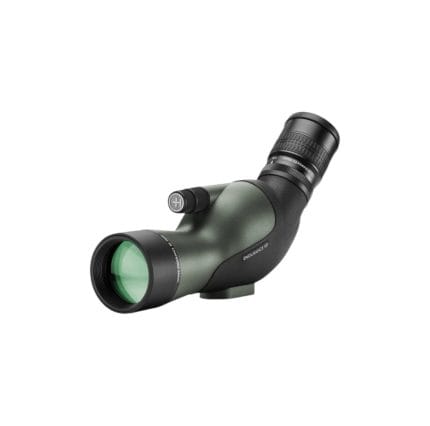
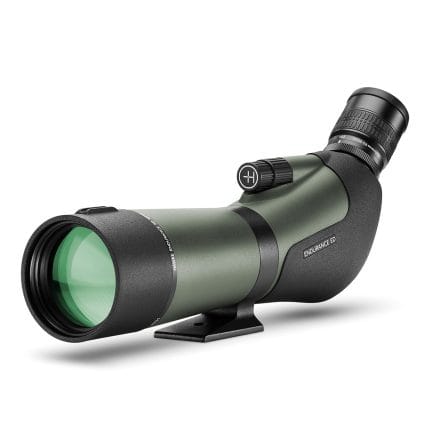
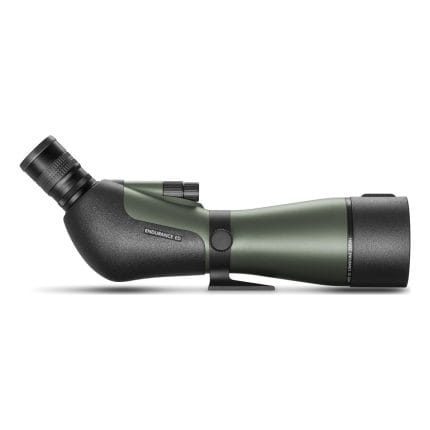
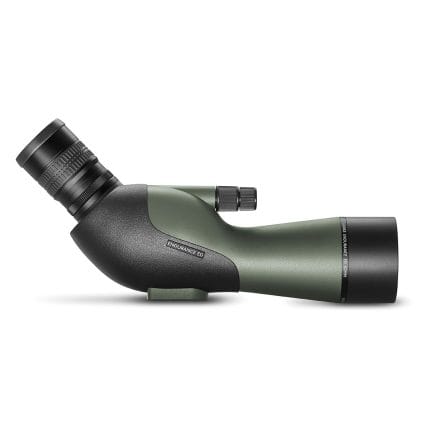
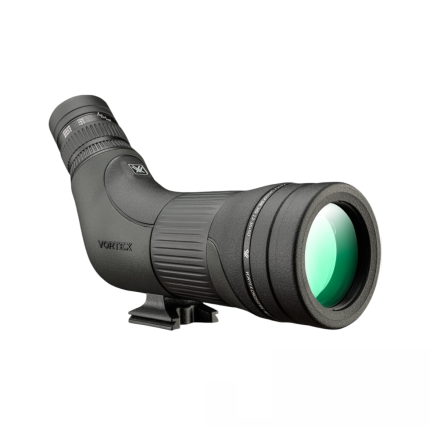
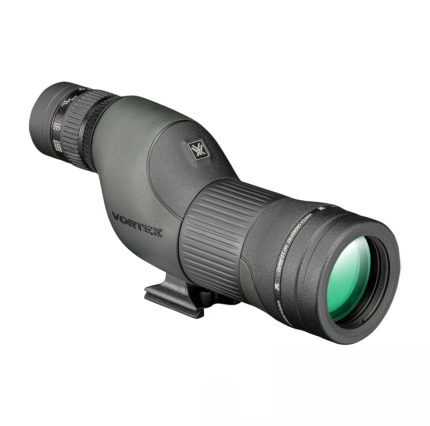
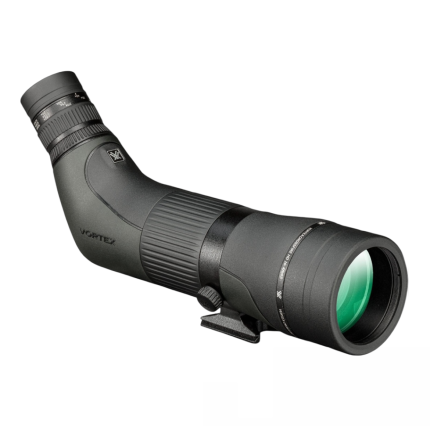
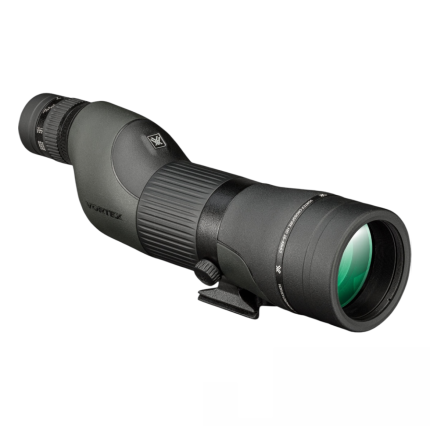
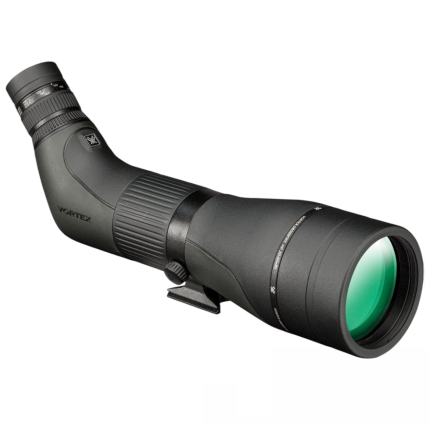
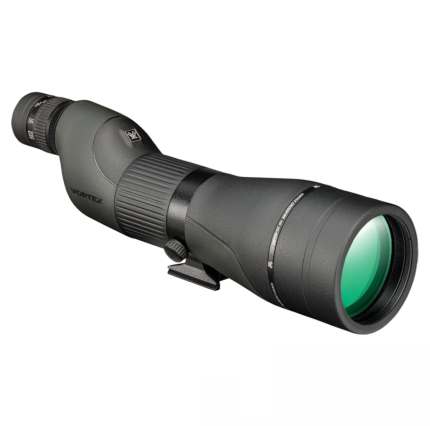
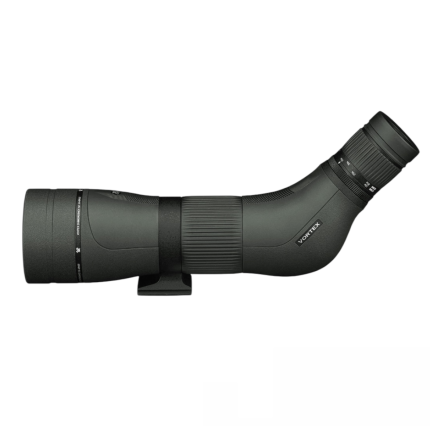
The two designs place the eyepiece differently. With a straight scope, the eyepiece is in line with the body. With an angled scope, you look down into the eyepiece. Neither is better for everyone, but some situations favour one or the other:
- If quickly getting onto a subject matters most, a straight scope keeps you looking in the same direction as the scope. Many people find that makes aiming feel more intuitive.
- If you often look upwards, for example at birds in trees or on rising ground, an angled scope can be more comfortable. You look down into the eyepiece rather than tilting your head back.
- If you share the view with people of different heights, an angled scope can make one support height work for more of them. How well this works depends on your support and the exact scope.
- If you will use an existing support, think about the height it reaches. A straight scope generally needs the eyepiece near your standing eye level, whereas an angled scope lets you look down into it.
Some scopes have features that change how the body sits or rotates on its mount, but these vary by model. If a feature like this matters to you, check that it appears in the listing for the exact scope.
Support: what to check before you buy or reuse one
Many spotting scopes are designed for use on a stable support. You may already own something suitable. Check these points against the exact scope and support:
- Attachment: how the scope fixes to a support, and whether your head and any quick-release plate fit it.
- Capacity: whether the head and legs are rated for the weight of the scope, plus any eyepiece and accessories.
- Working height: whether the support brings the eyepiece to a comfortable position for you, bearing in mind whether the scope is straight or angled.
- Weight: whether the support keeps the total kit at a weight you are happy to carry.
Confirm these details from the product listings or manufacturer information rather than assuming two items will work together. You can browse supports and other add-ons in our accessories range. Check fit for each item individually.
Eyepieces and glasses
Eyepiece arrangements differ between scopes, and accessories are not universally interchangeable. If you wear glasses, compare eye relief and eyecup design on the exact eyepiece you will use.
Frequently asked questions
When should I choose a spotting scope rather than binoculars?
A spotting scope suits settled, detailed viewing from one position, usually with the scope on a stable support. Binoculars give you two-eye viewing and are generally quicker to raise and use on the move, though their size and weight vary from model to model. A scope is not automatically more powerful than every pair of binoculars. Compare the actual magnification, size and weight of the models you are considering. Many people use both: binoculars for finding a subject and a scope for studying it.
Is a straight or angled scope better for me?
Neither design is better for everyone, so think about the views you take most often. A straight scope can make aiming feel more natural. An angled scope can be more comfortable for looking upwards, or for sharing one setup between people of different heights. The scenarios in the buying guide above can help you decide. Personal preference plays a large part. If you get the chance to look through both, that is often the clearest test.
Do I need a tripod?
For many spotting scopes, a stable support makes a real difference, especially at higher magnification. You do not necessarily need to buy a new one. If you already own a tripod or other support, check its attachment, capacity and working height against the exact scope, using the support checklist above. Whatever you use, remember that it adds to the weight you carry.
What should glasses wearers check?
Look at eye relief and the eyecup design. Eye relief is the distance from the eyepiece at which you can see the full field of view. Glasses hold your eye further from the eyepiece. That means eye relief and the way the eyecups adjust both affect how much of the view you can see comfortably. No single figure guarantees comfort for everyone. Fit depends on the specific eyepiece and on your own glasses, so compare these details on the models you are considering.
Are eyepieces included?
It depends on the scope. Some scopes have a built-in eyepiece, while others are designed around separate eyepieces, and package contents vary between models. Check the product details for the exact model you are interested in. Confirm compatibility before buying any additional eyepiece or accessory, and do not assume parts from one range will fit another.