DiscoveryOpt
Browse DiscoveryOpt riflescopes, laser rangefinders, and scope rings and mounts in one place. These listings can help whether you’re choosing a first scope, upgrading an existing one, adding a rangefinder or completing a mounting setup.
Choosing a DiscoveryOpt riflescope
Scopes in the same series can differ in magnification, focal plane and tube size. Compare individual listings rather than relying on the series name.
- Magnification range. Choose a range that suits how far away your subjects usually are and how quickly they move. Higher magnification makes the image appear larger. How much detail you can actually make out also depends on optical quality and light. Within a single variable scope, the field of view changes as you adjust magnification. This means the highest setting isn't always the easiest for nearby or moving subjects.
- Field of view. This shows how much of the scene you can see. Where field of view is quoted at a stated magnification, compare scopes at matching settings.
- Focal plane. Where a listing or the product documentation states whether a scope is first focal plane (FFP) or second focal plane (SFP), check that type when comparing models. The two designs handle the reticle differently as you change magnification. The FAQs below explain how.
- Tube diameter and objective housing. The main tube diameter sets the ring size you'll need. At the front of the scope, the objective housing (or bell) can be wider than the main tube. The mount therefore needs to give that housing enough physical clearance. The objective lens diameter in a scope's name doesn't describe the housing's outside dimensions. Clearance also depends on how the scope and the rest of your equipment sit together once mounted, so check physical dimensions where they're supplied.
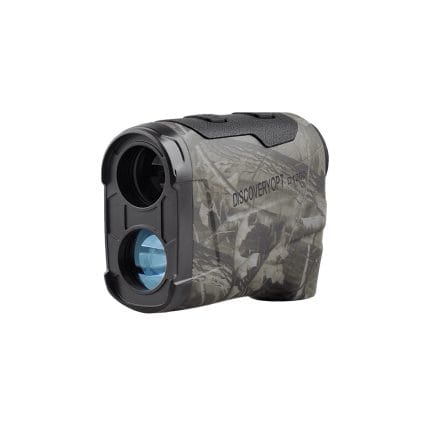
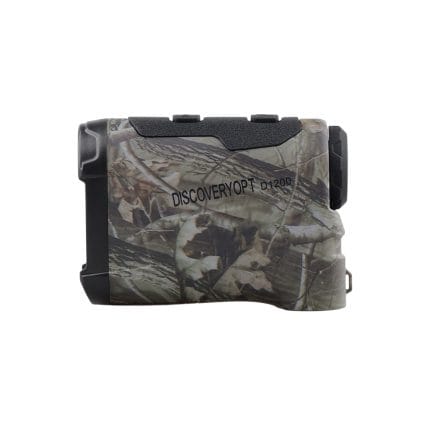
Choosing a DiscoveryOpt rangefinder
Start with the distances you usually need to measure and the kinds of targets involved. A rangefinder's headline rating describes what the manufacturer advertises for that model. Real readings vary with the target and the conditions. When comparing models, put their published ratings side by side only where the manufacturer defines them in the same way.
Choosing rings or a mount
Key factors in whether rings or a mount will suit your scope include:
- Ring diameter. This must match the scope's main tube diameter.
- Rail or base interface. The mount's attachment type must match the mounting system on your equipment.
- Height and clearance. The mount must leave enough physical room for the scope's objective housing and other parts. The actual clearance depends on the geometry of your scope and equipment once mounted.
Other details can also affect fit, so treat these as starting points rather than a complete check. Compare them against the specifications of both the scope and the mounting product.
Compare beyond DiscoveryOpt
To compare options from other manufacturers, browse all riflescopes, laser rangefinders and accessories.
DiscoveryOpt FAQs
What does the DiscoveryOpt range include?
Current examples include riflescopes from several series, laser rangefinders with different distance ratings, and scope mounts and rings. Each type does a different job:
- A riflescope determines your magnification, field of view and reticle design.
- Rings or a mount attach the scope to your rail or base, and must be sized to suit it.
- A rangefinder measures the distance to a target.
The selection changes over time.
What do the numbers in a scope's name mean?
Scope names commonly follow a "magnification × objective" format. In a name such as 4–16×44, the scope's magnification adjusts from 4× to 16×, and 44 is the objective lens diameter in millimetres. A single number before the "×" usually indicates a fixed-magnification scope. Letters added after the figures are manufacturer abbreviations for features. Their meanings vary between brands, so read them alongside the full specification.
Is a first focal plane or second focal plane scope better?
Neither design is better in every situation. The difference lies in where the reticle sits:
- First focal plane (FFP): the reticle and the image change scale together as you adjust magnification. The reticle's markings keep the same apparent relationship to the scene at every setting.
- Second focal plane (SFP): the reticle stays the same apparent size while the image grows or shrinks. The relationship between the markings and the scene changes as you adjust magnification.
If you want the reticle to relate to the scene in the same way at every magnification, FFP is designed for that. If you prefer a reticle that looks the same size at every setting, SFP is designed for that. The product documentation explains how a particular model's reticle is intended to be read.
Will a rangefinder always reach the distance in its name?
No. The figure in a rangefinder's name doesn't guarantee a reading at that range every time. Laser ranging depends on how reflective the target is, its size and angle, and conditions such as rain, mist and bright light. Manufacturers may define their maximum figures under particular test conditions and don't always publish them. A rated figure is most useful as a comparison point between models whose ratings are defined the same way.
Can I use DiscoveryOpt rings or mounts with a scope from another brand?
Fit depends on specifications, not on brand. Rings or a mount can suit a scope from any manufacturer when key factors match, such as ring diameter, rail or base interface, and height and clearance. For the same reason, a DiscoveryOpt mount won't necessarily fit a DiscoveryOpt scope. A size shown in a listing title doesn't confirm fit on its own, so compare the full specifications of both parts.
Can a series name tell me what features a scope has?
Not on its own. A series name identifies a product line, but models within it can differ in magnification range, focal plane and tube diameter. Read the specification for the model and variant you're considering, and use the manufacturer's documentation for any feature that matters to your decision.