

BINOCULARS
Binoculars let you view distant subjects with both eyes. The right pair depends on how and where you use them. This collection covers optical binoculars for birdwatching, nature observation, walking, marine use and general outdoor viewing. It also includes some models with an integrated laser rangefinder. Compare the magnification, objective size, field of view, weight and eye relief on each listing to find a pair that suits your activity, your hands and your eyes.
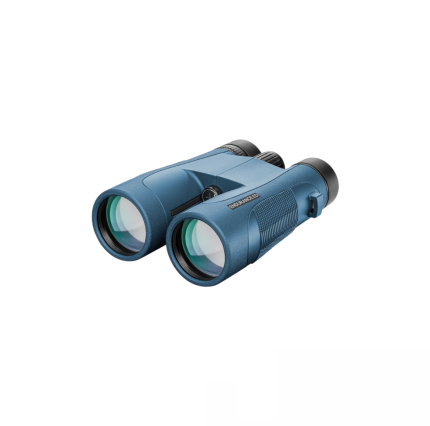
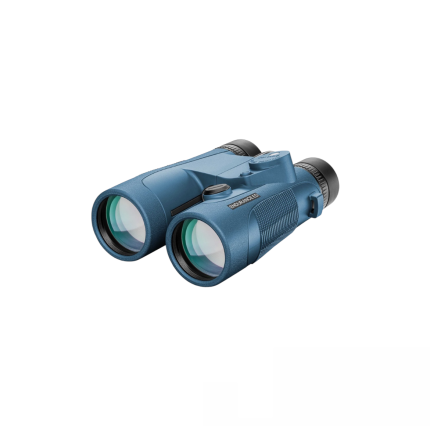
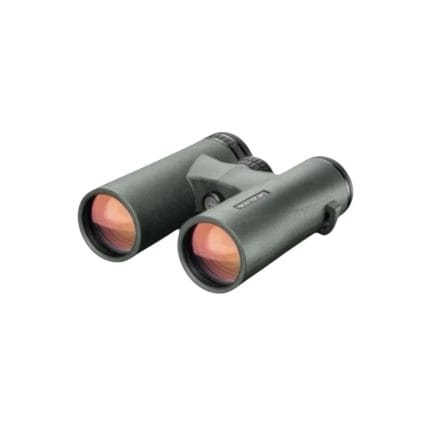
Hawke Frontier APO 10×42 Binoculars – Green
Original price was: £749.99.£699.99Current price is: £699.99.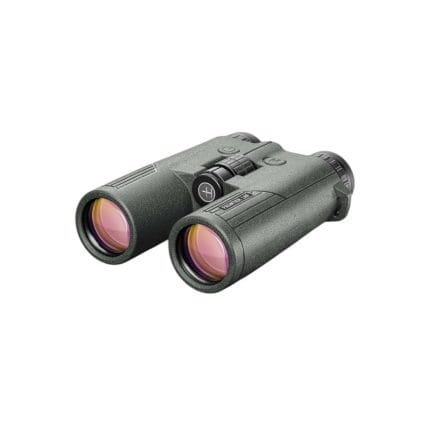
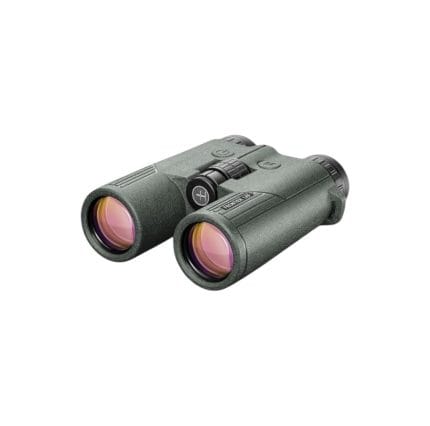
Hawke Frontier LRF 8×42 Binoculars
Original price was: £899.00.£599.00Current price is: £599.00.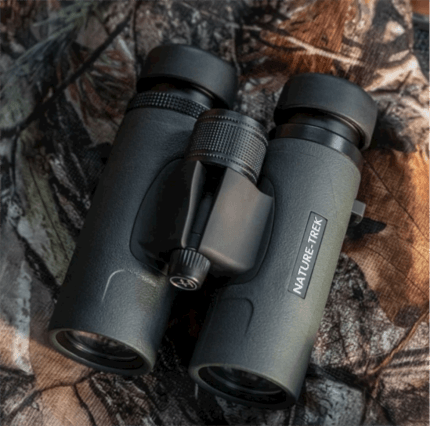
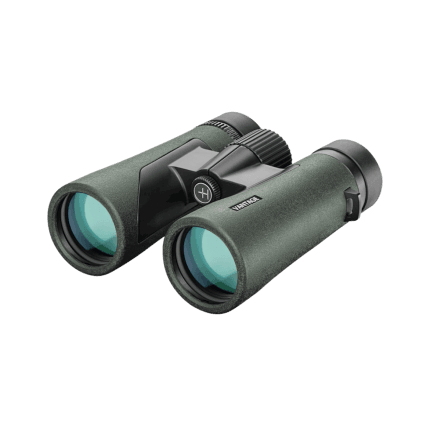
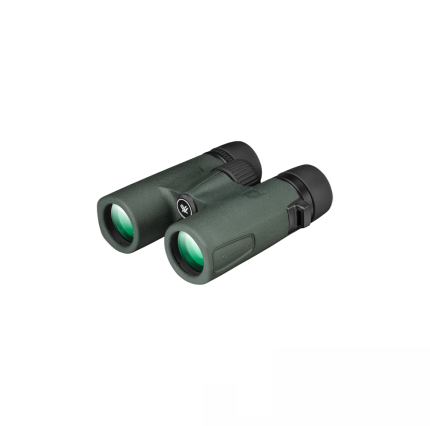
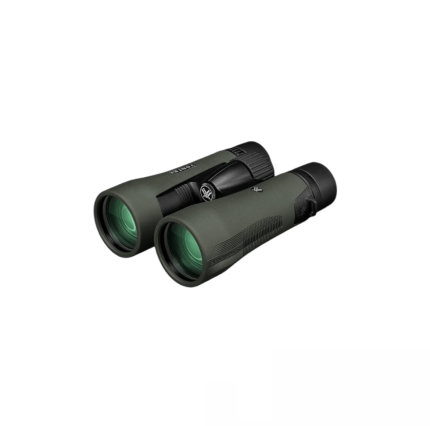
Choosing binoculars
No single pair suits everyone. The guidance below explains the main specifications and the trade-offs between them, so you can compare individual listings with confidence.
Magnification and objective diameter
Binoculars are usually described by two numbers, such as 8x42 or 10x32. The first number is the magnification. The second is the diameter of each objective (front) lens in millimetres.
- Magnification sets how much larger a subject appears. A larger image does not guarantee that you will see more detail. What you can make out also depends on the quality of the optics, how steadily you hold the binoculars, and the light and atmospheric conditions. Higher magnification also magnifies every movement of your hands, and it often comes with a narrower view.
- Objective diameter affects how much light the binoculars can gather, and it has a large effect on size and weight. A larger objective can help in some conditions. However, the image you see also depends on the optical design, the coatings, the exit pupil and the light around you. The exit pupil is the effective aperture divided by the magnification. A bigger number on the body does not guarantee a brighter view.
Field of view
Field of view is the width of the scene you can see at once. A wider view can make it easier to find and follow moving subjects. Two models with the same magnification can still have different fields of view, so it is worth comparing the actual figures. To make that comparison meaningful:
- Match the units. Listings usually give field of view either as an angle in degrees or as a width at a stated distance, such as metres at 1,000 m. An angle and a linear width cannot be compared directly unless one is correctly converted to the other.
- Match the reference distance. A width given in metres at 500 m cannot be set directly against a width given in metres at 1,000 m. Check that both figures use the same distance before comparing them.
- Compare like with like. Higher magnification usually narrows the view. Comparing field of view between models of the same or similar magnification therefore tells you more than comparing, say, an 8x pair with a 12x pair.
Focus
If you often watch subjects close by, such as garden birds, insects or plants, check the listed minimum focus distance for each model. Focus controls also differ between designs. Check the listing or the manufacturer's manual to see how a particular model focuses and how it balances focus between your two eyes, for example with a dioptre adjustment.
Size, weight and carrying comfort
Think about how long you will carry the binoculars and how often you will raise them. A compact or mid-sized pair may be easier on a long walk or when travelling. A larger pair may suit a fixed viewing spot or a boat, where weight matters less. Compare the listed weight and dimensions alongside the optical figures, rather than judging by the model name alone.
If you will use your binoculars near water or in wet weather, check each listing for its stated water resistance. Do not assume every model offers the same protection.
Glasses and eye relief
Eye relief is the distance from the eyepiece at which you can see the full field of view. Spectacles hold your eyes further from the eyepiece, so glasses wearers generally need enough eye relief to see the whole image. Check whether and how the eyecups on a given model adjust, because this affects how easily you can set the right distance.
Comfort still varies with your frames, face shape and eye spacing, and no single eye-relief figure suits every person. Check the specification for each model and, where you can, try the fit.
Binoculars with integrated rangefinders
Some binoculars in this collection combine the optics with a laser rangefinder, which displays the distance to a target. These models differ from conventional binoculars because they have extra controls, a power source and an electronic display. Their measurement functions vary from model to model. Check each listing to see what the rangefinder does, what it needs to run and what is included.
Support and accessories
Many people use binoculars handheld. Steady support can help, however, with higher magnification, heavier models or long periods watching one area. Some binoculars accept a tripod adapter, which may be sold separately. Do not assume every model is tripod-compatible or comes with an adapter. Check the individual listing and package contents for the exact fitting. You can also browse our accessories.
Related viewing options
- Spotting scopes: most conventional spotting scopes use a single eyepiece and offer higher magnification than typical binoculars. They are often used on a tripod or other support, which makes them a common alternative for watching from a fixed position. Check each listing for its format and support options.
- Thermal binoculars: a separate imaging category. A thermal imager detects infrared radiation from a scene. This can include radiation emitted by objects and radiation reflected from their surfaces, in proportions that vary. It displays differences in that signal as an image. The image can be affected by atmospheric conditions, and it does not necessarily represent actual temperatures. Thermal devices work differently from the optical binoculars on this page. Do not assume any model here has thermal capability unless its listing says so.
- Monocular wildlife collection: browse our monocular range if you would prefer a single-eyepiece optical device.
Frequently asked questions
What do numbers such as 8x42 mean?
In 8x42, "8x" is the magnification: subjects appear eight times larger than they do to the naked eye. "42" is the diameter of each objective lens in millimetres. The two numbers do not tell you how far away you can identify something. That depends on the subject, the light, the conditions and the optics.
Should I choose 8x or 10x magnification?
Neither is better in every situation. A 10x pair makes subjects appear larger, but it also magnifies hand movement more noticeably and may have a narrower field of view. A larger image does not by itself guarantee that you will see more detail. With an 8x pair, hand movement is magnified less, which can make the image easier to hold steady and moving subjects easier to follow. Results still depend on the model. Compare the actual field of view in the same units. If the figures are given as linear widths, such as metres at 1,000 m, also check that they use the same reference distance. Angular figures in degrees do not need one. Compare the weight and the handling of the models you are considering too, and think about how you mainly watch.
What should glasses wearers check?
Check the eye-relief figure and whether and how the eyecups adjust. Enough eye relief lets you see the full field of view with your spectacles on. Adjustable eyecups, where fitted, help you set the right distance. Frames and faces vary, so treat the specification as a guide and try the fit if possible.
How do size and objective diameter affect portability?
Larger objectives usually mean larger, heavier binoculars, while smaller objectives tend to suit packing and carrying. A larger objective can gather more light, but it does not guarantee a brighter view in every design or condition. Weigh the listed size and weight against how far you will carry the binoculars and how you plan to use them.
Will I need a tripod?
Not necessarily. Many people use binoculars handheld. A tripod or other support may help with higher magnification, heavier models or extended viewing. Check whether the specific model accepts a tripod adapter, which fitting it needs and whether an adapter is included, as this varies.
Do rangefinder binoculars work like ordinary binoculars?
They offer two-eye optical viewing, plus a built-in laser rangefinder that measures the distance to a target. They therefore have extra controls and an electronic display, and the rangefinding function needs a power source. Features, displays and measurement capabilities vary, so check each listing and the manufacturer's information for the exact model.