RIX Optics
This RIX Optics collection includes several types of device:
- handheld TITAN and POCKET thermal monoculars
- LEAP thermal riflescopes
- the TOURER T50 digital night-vision scope
Before you compare models, make two decisions. First, do you need a handheld viewer or a riflescope? Second, does thermal imaging or digital night vision suit the way you’ll use it? The guide below the products explains both choices. The products shown reflect the current listings and may change.

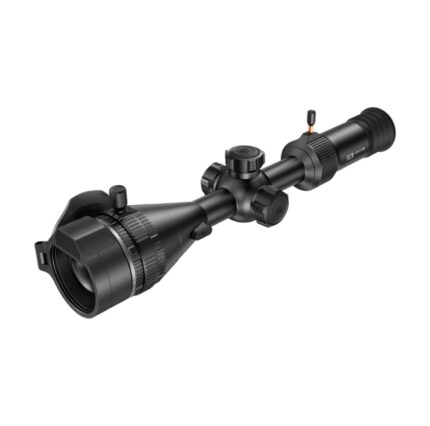
RIX Optics LEAP L12R Thermal Riflescope
Original price was: £4,995.00.£4,599.00Current price is: £4,599.00.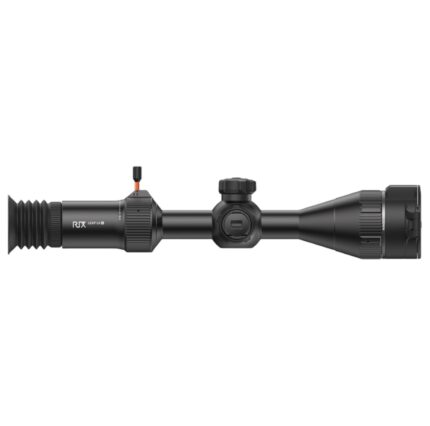
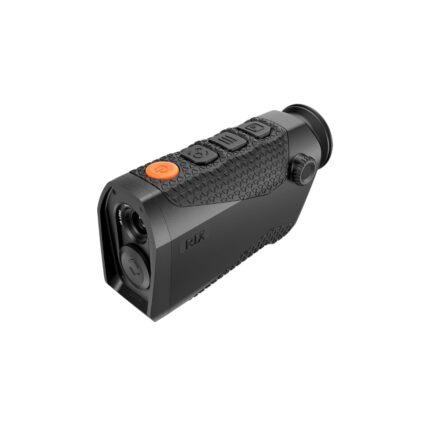
RIX Optics LEAP L6R Thermal Riflescope with Laser Rangefinder
Original price was: £2,995.00.£2,499.00Current price is: £2,499.00.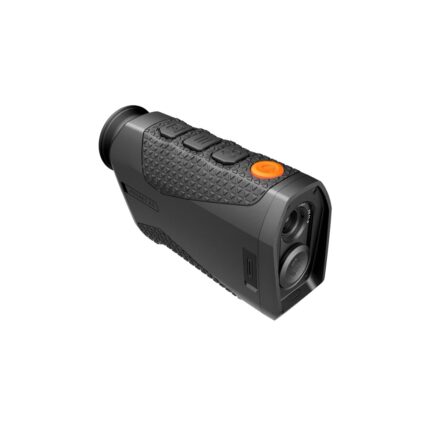
Handheld monocular or riflescope?
The RIX products listed here come in two formats, and each does a different job.
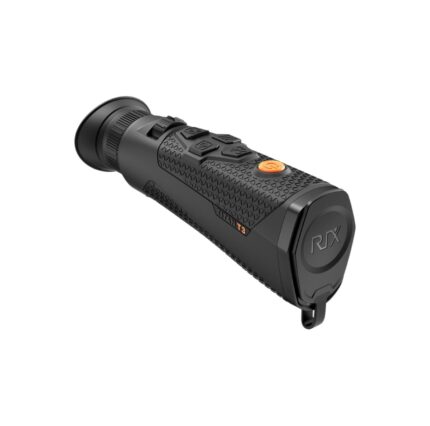
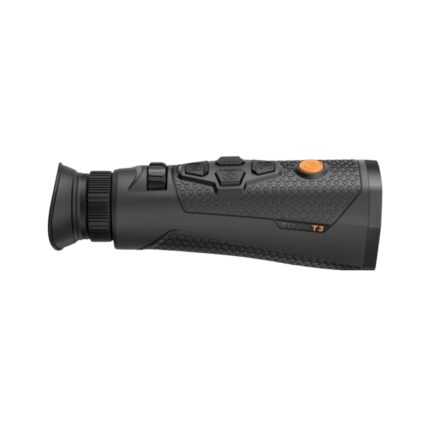
- Thermal monoculars are self-contained handheld viewers for observing and scanning. You can carry one, raise it to look over a field, hedgerow or woodland edge, then put it away again. It can be used on its own without being fitted to anything. Accessory compatibility varies between models, so if you plan to use one with an accessory, check what that model supports rather than assuming it will fit. A monocular suits you if you mainly want to watch wildlife, check ground or look around an area. This group includes the Titan T6, Titan T3, Pocket K2 and Pocket K3.
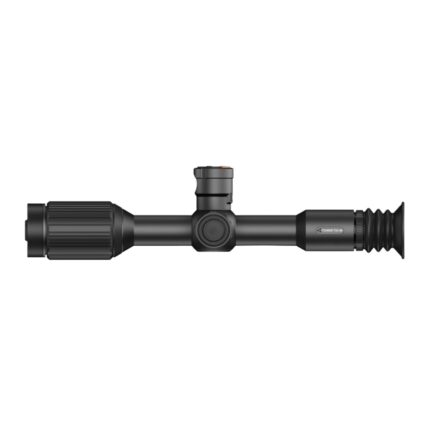
- Riflescopes are sighting optics made to be fitted to a rifle. They are not general handheld viewers. The Leap L6R and Leap L12R are listed as thermal riflescopes. The Tourer T50 4K LRF is listed as a digital night-vision scope.
Some buyers need only one format. Others use a monocular for general observation alongside a separate scope. If you're choosing between them, ask yourself one question: do you need a viewer you can carry and use independently, or a sighting optic for a rifle?
Thermal imaging and digital night vision
These are two different technologies.
- Thermal imaging detects infrared radiation coming from the scene. Objects emit some of this radiation, and surfaces can also reflect some of it. The device turns differences in that signal into an image, so a subject stands out when its signal contrasts with its surroundings. How much contrast you see depends on the subject, its surroundings and the conditions at the time. Don't automatically treat a thermal image as a temperature measurement. Some thermal devices can measure temperature, so if you need that, confirm whether the exact model you're considering supports it.
- Digital night vision builds an image from available light. In darker conditions, infrared illumination can help. Depending on the exact model and how dark it is, an illuminator may be built in, supplied separately or not needed at all.
In this collection, the TITAN, POCKET and LEAP models are thermal devices. The TOURER T50 is a digital night-vision scope.
What to compare between RIX models
Specifications vary between models and versions, so compare the exact products you're considering. Check the listing for each one. If something you need isn't stated or isn't clear, ask before ordering.
- Sensor, lens and display: together these affect how much detail you can see. Check the figures for each model rather than assuming they apply across a whole family.
-
Field of view (FOV): a wider field covers more of the scene, which can make scanning easier. A narrower field covers less of the scene, but that alone doesn't make the image more detailed. How large and how clear a subject looks depends on several things: magnification, sensor, optics, display, image processing, distance and conditions.
- FOV can be given as an angle in degrees, or as a linear width at a stated distance.
- Compare angular figures only with other angular figures.
- Compare linear figures only when they use the same units and the same reference distance.
- Don't set a figure in degrees against a linear width unless you've converted one to the other with a reliable method.
- Size, weight and handling: these matter most for a handheld device you'll carry or hold for long periods.
- Power and batteries: check how each model is powered and what its listing says about the battery system.
- Laser rangefinder (LRF): check whether the exact version you're buying includes one.
- What is included: package contents and accessories can differ between models.
Read published detection distances carefully. Seeing that a heat source is there is not the same as identifying what it is.
Related categories
Frequently asked questions
What kinds of RIX Optics products are in this collection?
The collection currently lists three types of product:
- TITAN and POCKET handheld thermal monoculars
- LEAP thermal riflescopes
- the TOURER T50 digital night-vision scope
A product appearing here doesn't confirm its availability or package contents. Check the listing for the specific item. If availability or contents aren't stated or aren't clear, ask before ordering.
How does a RIX TITAN monocular differ from a LEAP thermal scope?
RIX describes the TITAN T6 as a thermal imaging monocular and the LEAP L6R as a thermal imaging riflescope. Both use thermal imaging, but they do different jobs.
- TITAN monocular: a self-contained handheld viewer for observing and scanning, which can be used on its own.
- LEAP scope: a sighting optic made to be fitted to a rifle.
If you mainly want to look around and observe, a monocular is the more natural fit. If you need a thermal sighting optic, look at the LEAP range. Once you've chosen a format, compare the features listed for the exact models.
Does every RIX device have a laser rangefinder?
Don't assume that any particular listing includes one. RIX's own pages describe a laser rangefinder for the TITAN T6 and LEAP L6R versions they cover, and the TOURER T50 listing title here includes "LRF". However, manufacturer pages and product titles don't confirm the exact version or package supplied. Check the listing for the specific item. If the feature matters to you and the listing doesn't make it clear, ask before ordering.
How should I compare RIX thermal monoculars?
Start with how often you'll use the device and where. Then compare the TITAN and POCKET models on:
- sensor, lens and display
- field of view, comparing angular figures with angular figures, and linear figures only when units and reference distance match
- size and weight
- power and battery system
- whether that version includes a rangefinder
A wider field of view helps with scanning, but a narrower one isn't automatically more detailed. If the specification sheets feel overwhelming, focus on the two or three points that matter most for your use.
Are RIX thermal and digital night-vision devices the same?
No. They use different technologies.
- Thermal models (TITAN, POCKET and LEAP): form an image from detected infrared radiation, showing the contrast between a subject and its surroundings.
- Digital night vision (TOURER T50): forms an image from available light, sometimes helped by infrared illumination.
Thermal imaging relies on contrast, while digital night vision relies on light. That makes each one better suited to different situations, so think about the conditions in which you'll use the device.
Are accessories or illuminators included with RIX products?
It depends on the model. Check the listing for the exact device you want. If package contents aren't stated or aren't clear, ask before ordering. Don't assume that another model's contents, or another retailer's bundle, will apply.