

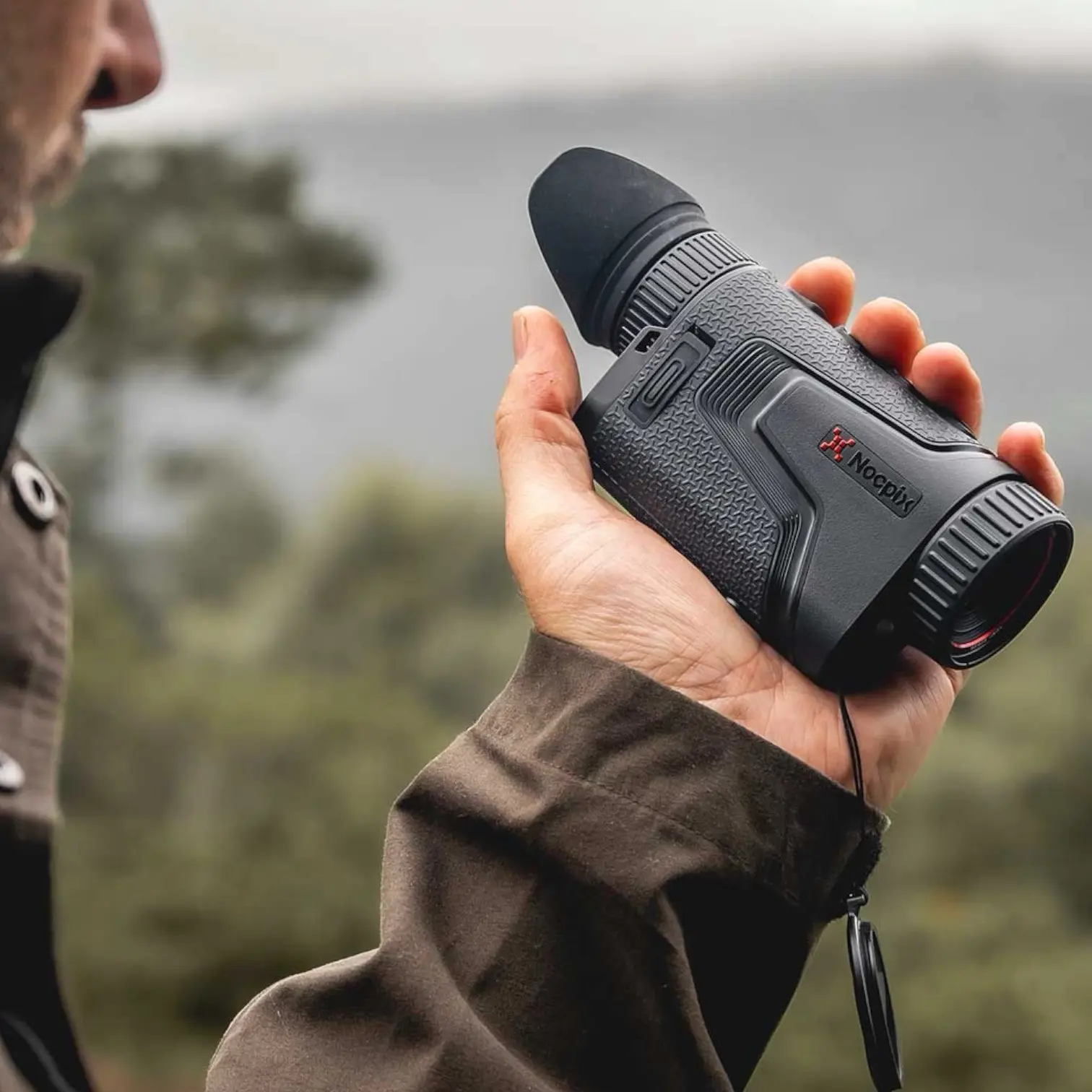
Best Budget Thermal Monoculars and Spotters in the UK
For most UK buyers, the best budget thermal monocular is the Nocpix LUMI L19. It pairs a 384×288 sensor with a bright 19mm f/0.9 lens and a 3-year warranty, plus an extra year when you register it with Nocpix, for £696 (normally £899).
If you need to stay under £500, the Pixfra Mile 2 M207 at £350 is the cheapest worthwhile choice, with a wide 24° view for gardens and woodland edges. For birding and close wildlife, the Pulsar Axion Compact XQ19 gives the widest view in this guide at just 250 g.
Choose by budget first, then by how far away the animals you watch usually are.
Best budget thermal monoculars in the UK: quick picks
Eight standalone thermal spotters, each chosen for one job. Every price is from our own listings.
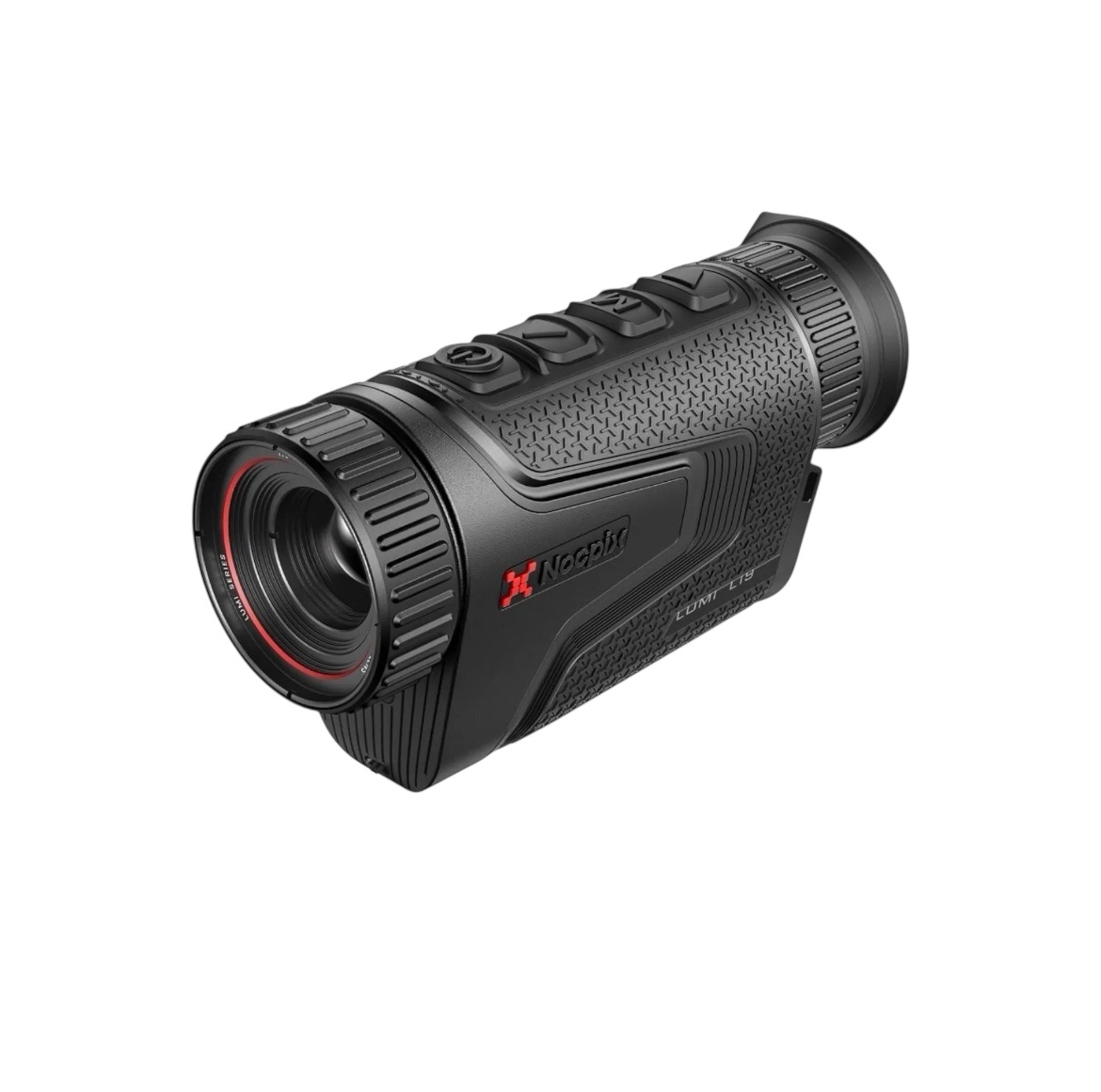
A 384×288 sensor and fast 19mm f/0.9 lens give real detail for the money. It stays under £1,000 even at full price.
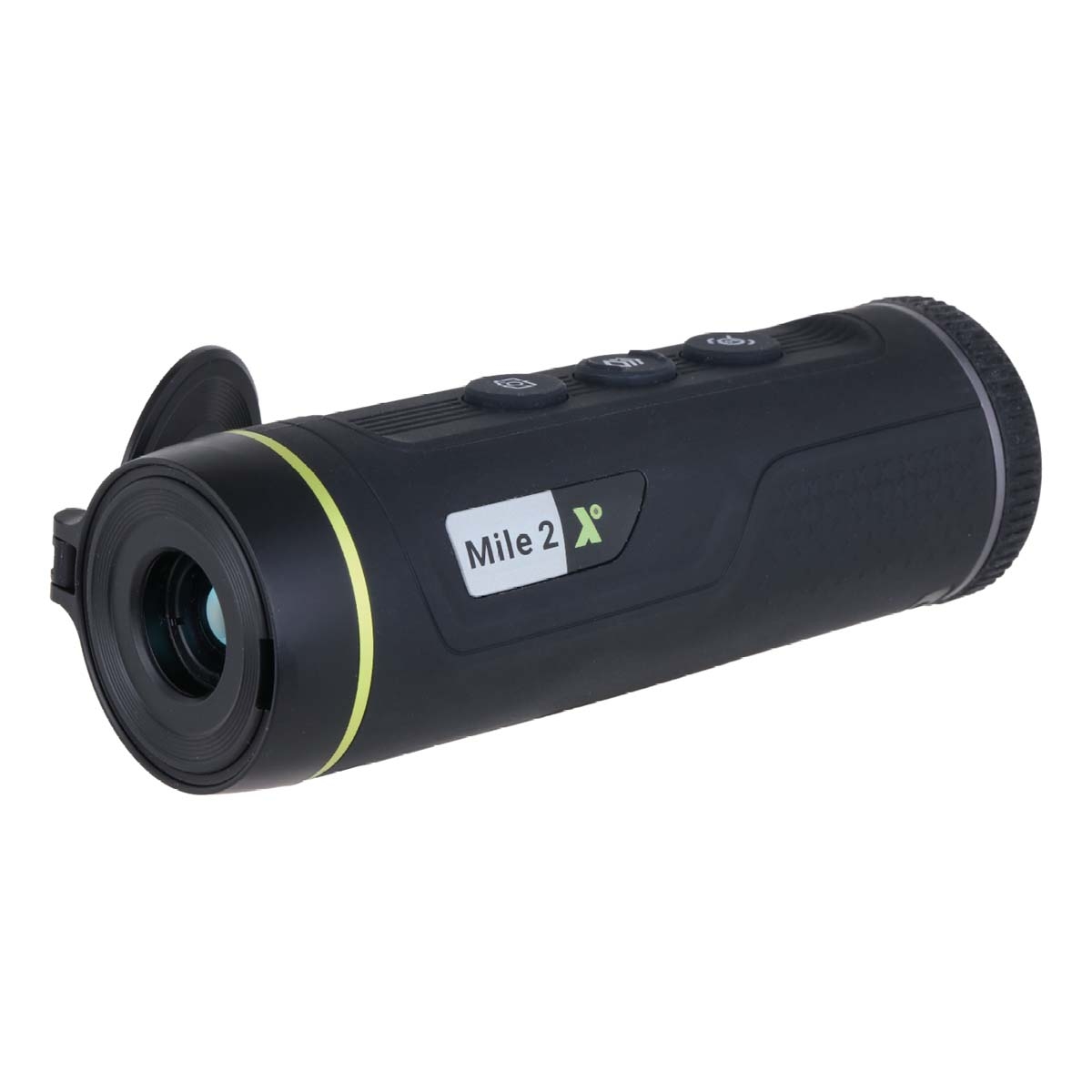
The cheapest model here, with a 24° field of view, 8.5 hours of battery and built-in Wi-Fi.
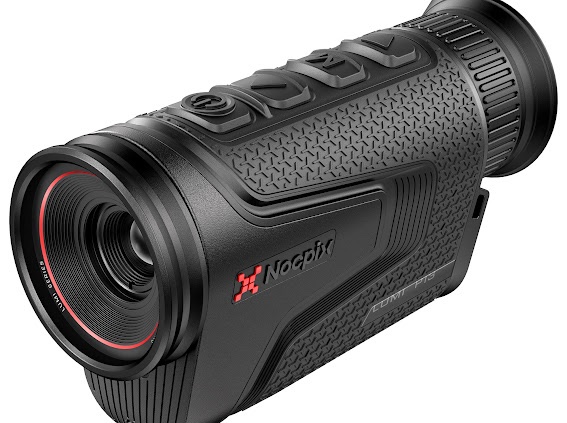
A more sensitive ≤20mK sensor, 2–8× zoom, a swappable battery and a 3-year warranty (4 years when registered) for under £400 while the offer lasts.
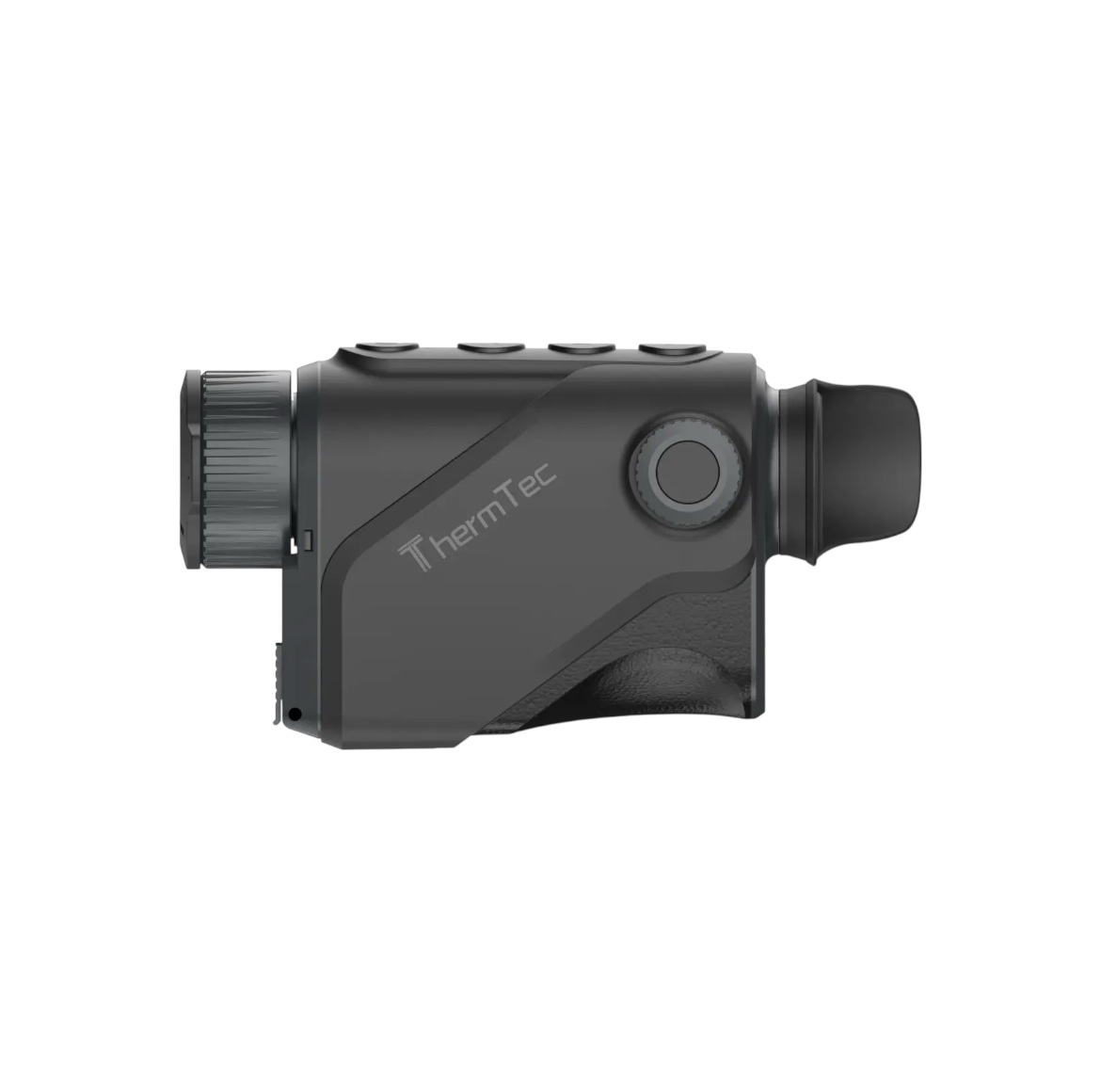
The cheapest 384×288 monocular in our range, with up to 10 hours of rated battery life.
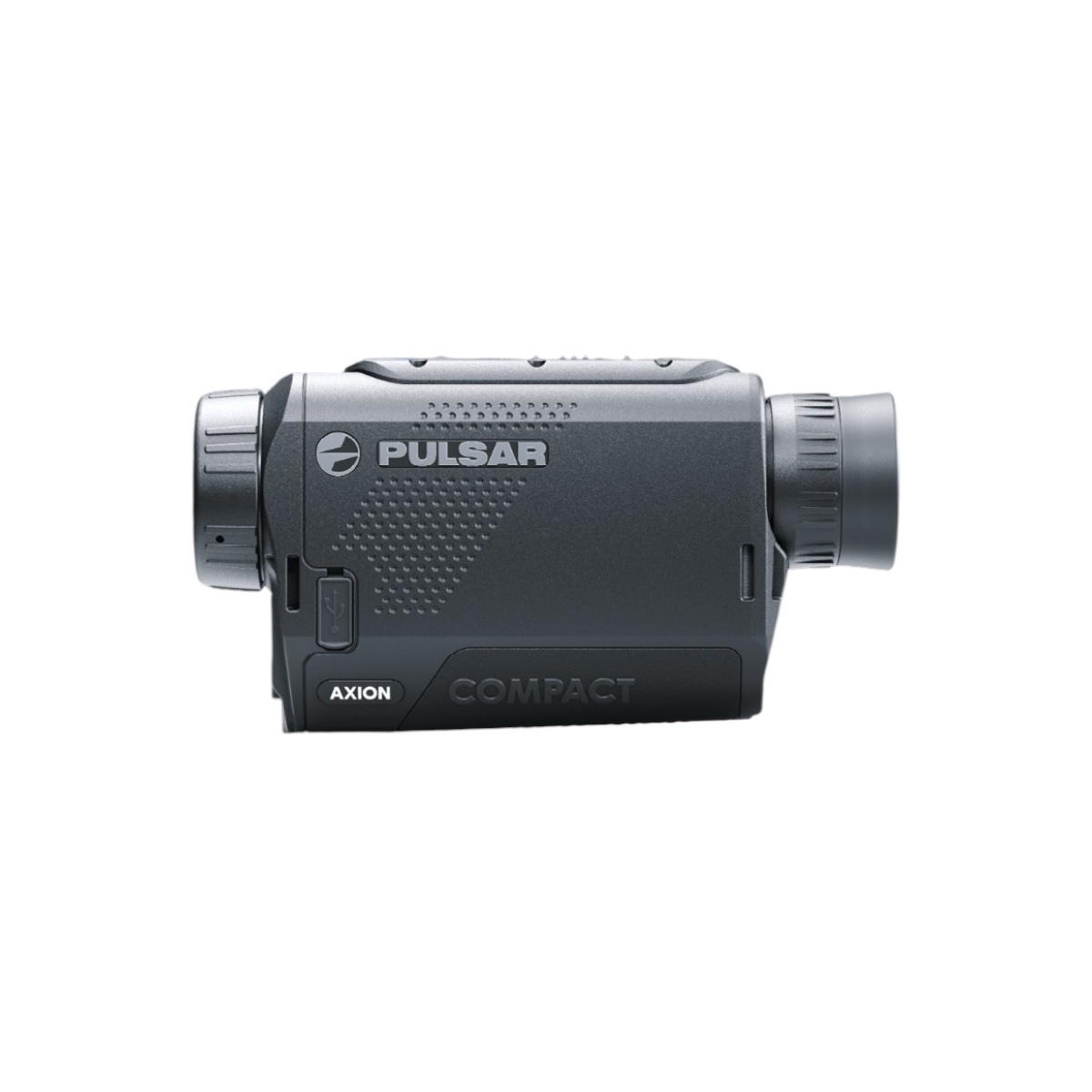
The widest view in this list, 34.7 m across at 100 m, in a 250 g body.
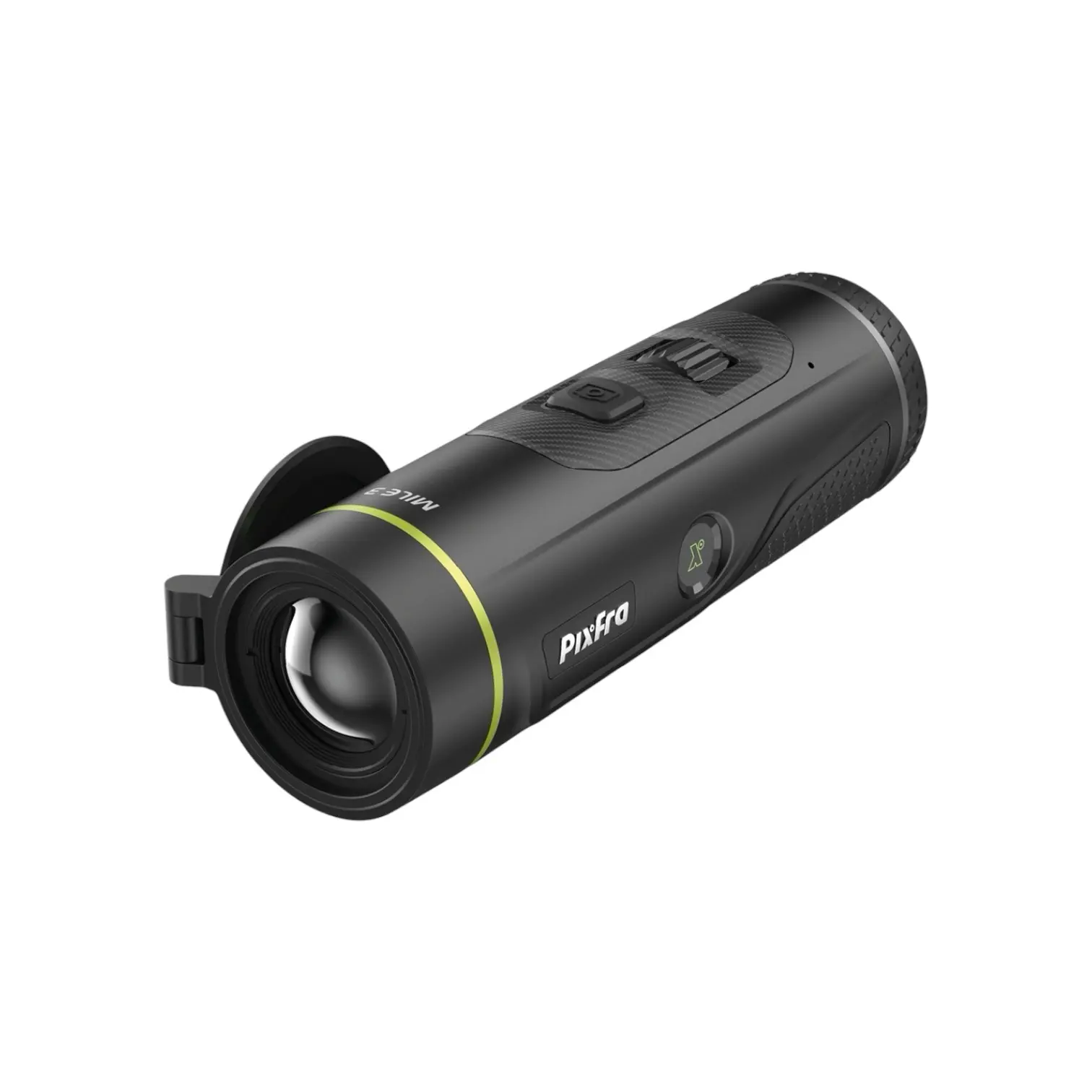
A 25mm f/0.9 lens, ≤15mK sensitivity, a 1,300 m rated detection range and a full-HD display.
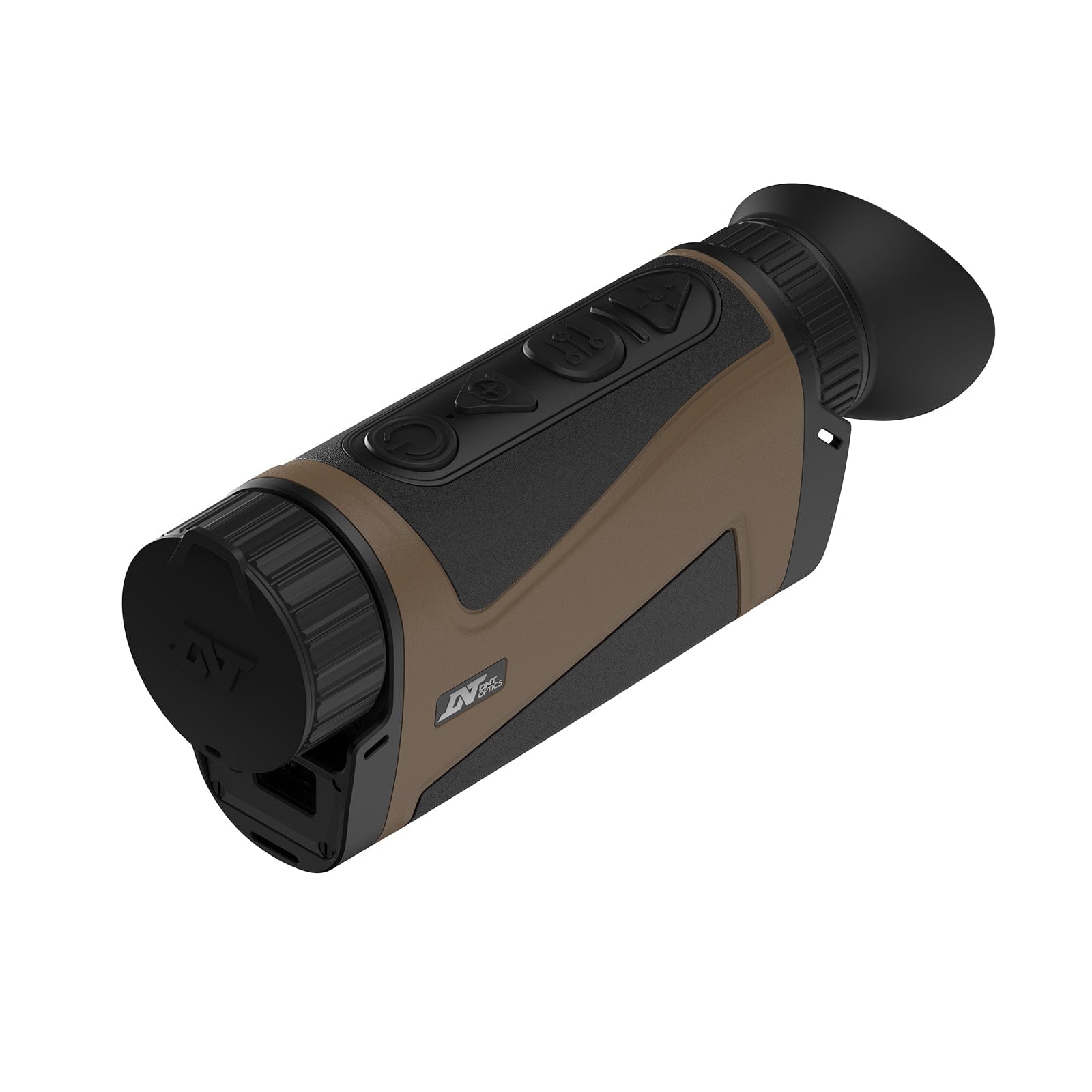
A built-in laser rangefinder (5–1,200 yards) on a 384×288, ≤18mK monocular.
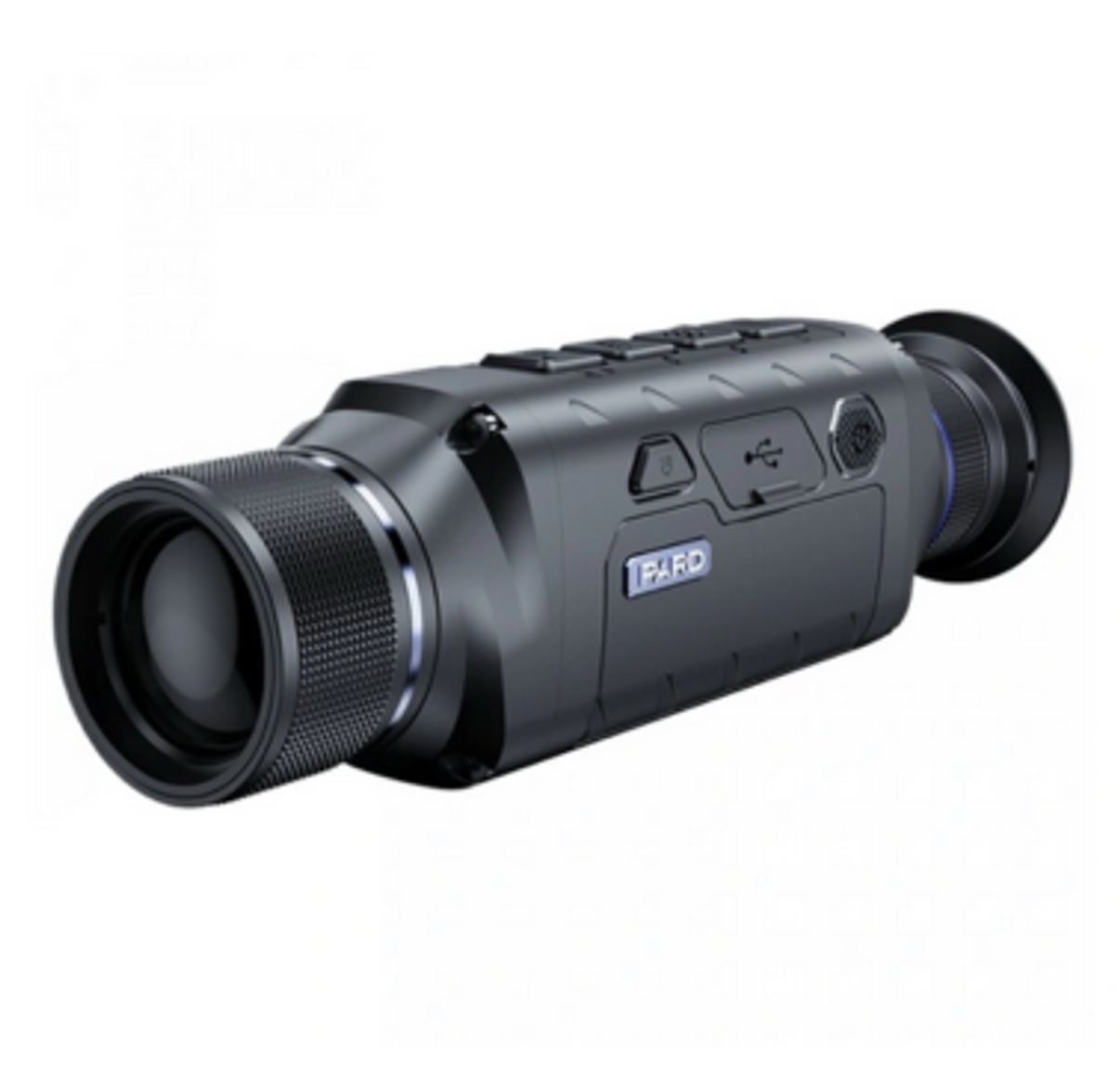
2.9× base magnification and an 800 m rated detection range from a 256×192 sensor.
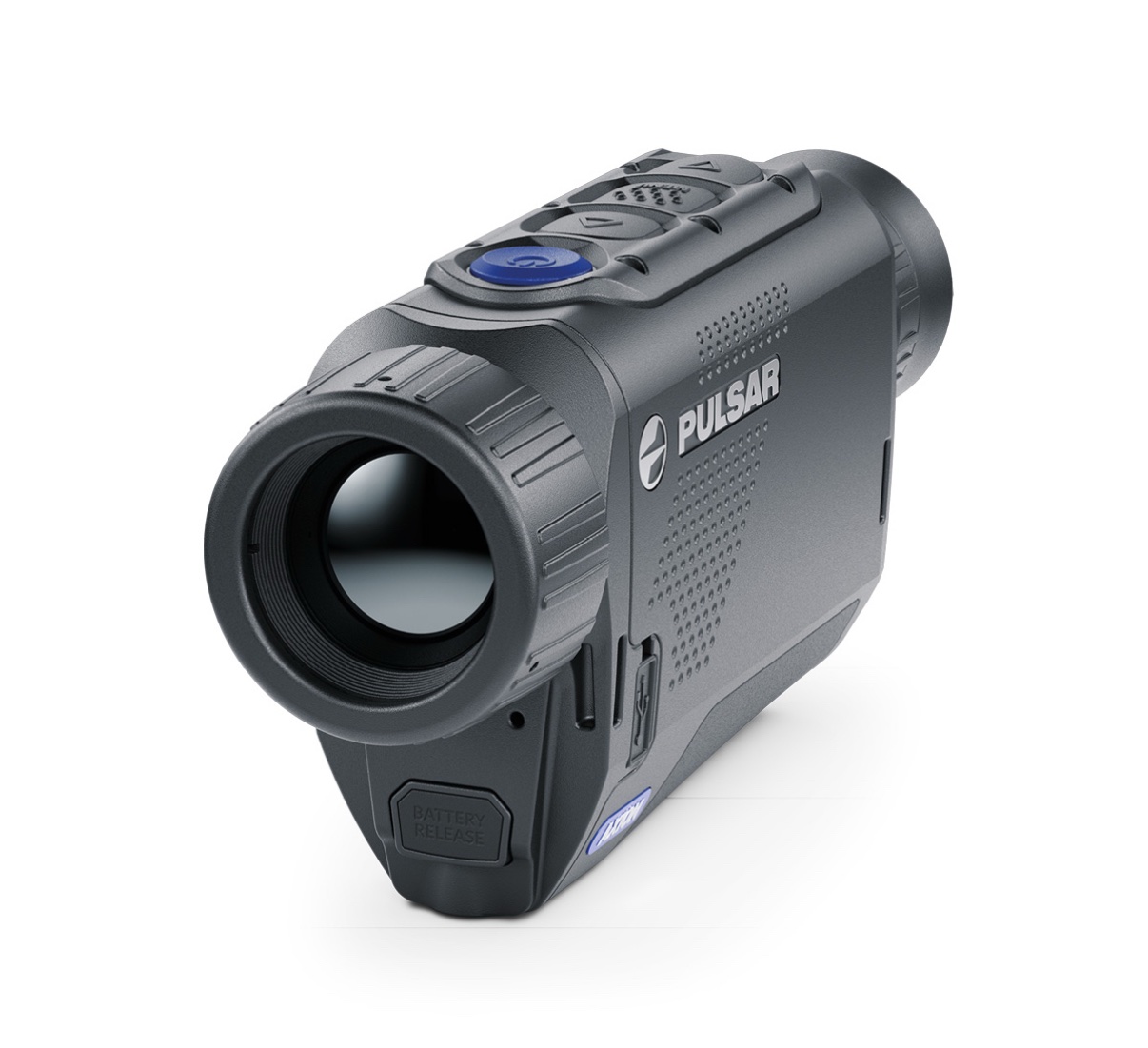
Also worth a look while it's on offer: the Pulsar Axion XQ30 Pro at £870 (was £1,070). It has a 30mm lens, a 1,050 m rated range and 8 hours of battery.
Compare them at a glance
| Model | Price | Sensor | NETD | Lens | Field of view | Base mag. | Rated detection | Battery | Weight | Best for |
|---|---|---|---|---|---|---|---|---|---|---|
| Pixfra Mile 2 M207 | £350 | 256×192, 12µm | <35mK | 7mm f/1.0 | 24.0° | 1.1× | 350 m | 8.5 h (built-in) | 270 g | Lowest price, gardens |
| Nocpix LUMI P13 | £398 | 256×192, 12µm | ≤20mK | 13mm f/0.9 | 13.5° × 10.1° | 2× | 670 m | 6 h (18650) | 310 g | Budget step-up |
| Pard Leopard 256 (16mm) | £599 | 256×192, 12µm | ≤25mK | 16mm | – | 2.9× | 800 m | 6 h (18650) | 300 g | Open ground on a 256 budget |
| ThermTec Cyclone 315 | £599 | 384×288, 12µm | ≤20mK | 15mm f/1.0 | 17.5° | 1.4× | – | Up to 10 h | – | Cheapest 384×288 |
| Nocpix LUMI L19 | £696 | 384×288, 12µm | ≤18mK | 19mm f/0.9 | 13.8° × 10.4° | 2× | 980 m | 4.5 h (18650) | 335 g | Best all-rounder |
| DNT H325R HOUND | £810 | 384×288, 12µm | ≤18mK | 25mm | 18.4 × 13.8 yd @ 100 yd | 2.5× | – | 5.5 h | – | Measuring distance |
| Pulsar Axion XQ30 Pro | £870 | 384×288, 17µm | <25mK | 30mm f/1.2 | 13.3° | 2× | 1,050 m | 8 h (APS3) | 300 g | Fields, while on offer |
| Pulsar Axion Compact XQ19 | £880 | 384×288, 17µm | <18mK | 19mm f/1.0 | 19.5° | 1.5× | 750 m | 8 h (APS3) | 250 g | Birding, close wildlife |
| Pixfra Mile 3 M325 | £990 | 384×288, 12µm | ≤15mK | 25mm f/0.9 | 19.3 × 14.3 m @ 100 m | 1.8× | 1,300 m | 5.5 h per 18650 | ≤300 g* | Longer range |
Prices checked 26 November 2026; each product page shows the live price. Rated detection is the manufacturer's figure for spotting a heat source; you'll recognise what the animal is at a shorter distance. "–" means the figure isn't listed. *Without battery.
How we chose these monoculars
Every pick is a standalone handheld thermal monocular, often called a thermal spotter, that we sell and have in stock. We compared what each one gives you for the money, then gave each model the job it does best. Prices and specifications come from our own product listings.
- Sensor resolution
- Sensitivity (NETD)
- Lens and field of view
- Rated detection range
- Battery life and swapping
- Weight and warranty
The best budget thermal monoculars, in detail
Why each model earns its place, what it's like to use, and who should choose something else.
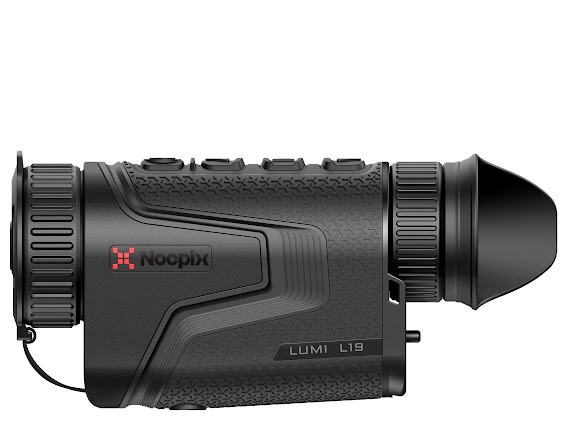
Nocpix LUMI L19
The LUMI L19 gives you the 384×288 sensor most buyers move up to after a 256 model, at a price that stays below £1,000 even at full RRP. Its 19mm lens has a fast f/0.9 aperture and the sensor is rated ≤18mK. That combination suits watching deer, foxes and badgers out to a field edge and beyond. Nocpix rates detection at up to 980 m.
It's easy to live with. The 1024×768 AMOLED display is sharp. There's 32GB of storage with a built-in microphone, and Wi-Fi for sharing what you record. At 335 g it's light enough to carry all night, and it's IP67 rated against rain and dust. The one thing to plan for is battery life: a single 18650 cell is rated at 4.5 hours, so carry a spare. Because the cell is replaceable, that's a cheap and simple fix.
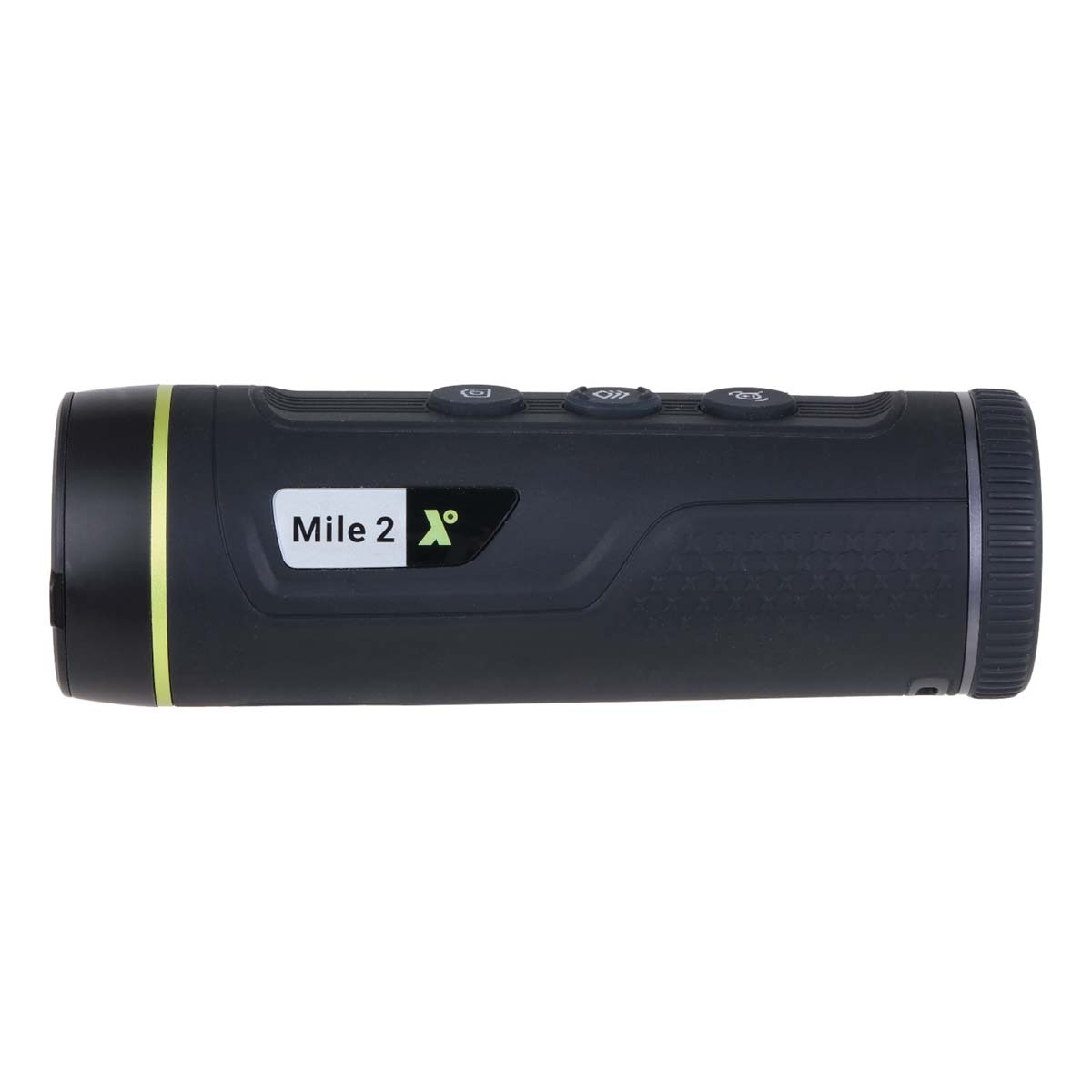
Pixfra Mile 2 M207
If £500 is your ceiling, the M207 is the one to look at. It's the only monocular in our range under £500 even at its normal price (£400, now £350). Its 7mm lens gives a very wide 24° field of view at a low 1.1× magnification, which is what you want when checking a garden, a hedgerow or a woodland ride where animals are close and moving.
The 256×192 sensor is rated at under 35mK, with detection rated at up to 350 m, so think of the M207 as a short-range finder. You still get plenty for the price: 8.5 hours from the built-in battery, 16GB of recording, Wi-Fi that streams to up to four phones, six colour palettes, and a 270 g body that charges over USB-C.
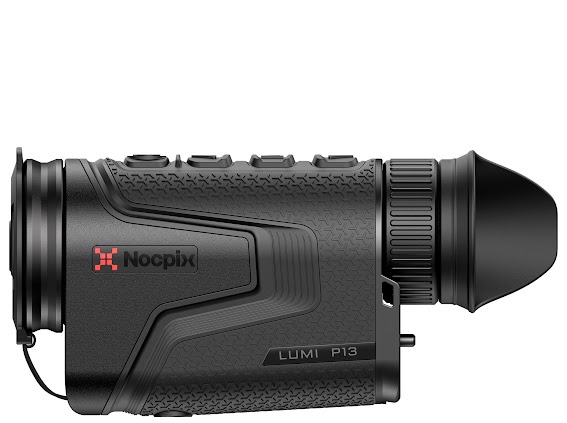
Nocpix LUMI P13
The LUMI P13 is the L19's smaller sibling, with a 256×192 sensor and a 13mm f/0.9 lens. Its ≤20mK sensitivity is a clear step up from entry-level models, and its 2× base magnification gives you more reach than the M207. Nocpix rates detection at up to 670 m.
Its normal price is £539. At the current £398 it's the best-equipped thermal spotter you can buy for under £400. You get the same 1024×768 AMOLED as the L19, 32GB of storage with a microphone, Wi-Fi, IP67 protection and a replaceable 18650 battery rated at 6 hours, all backed by a 3-year warranty that goes to 4 years when you register it with Nocpix.
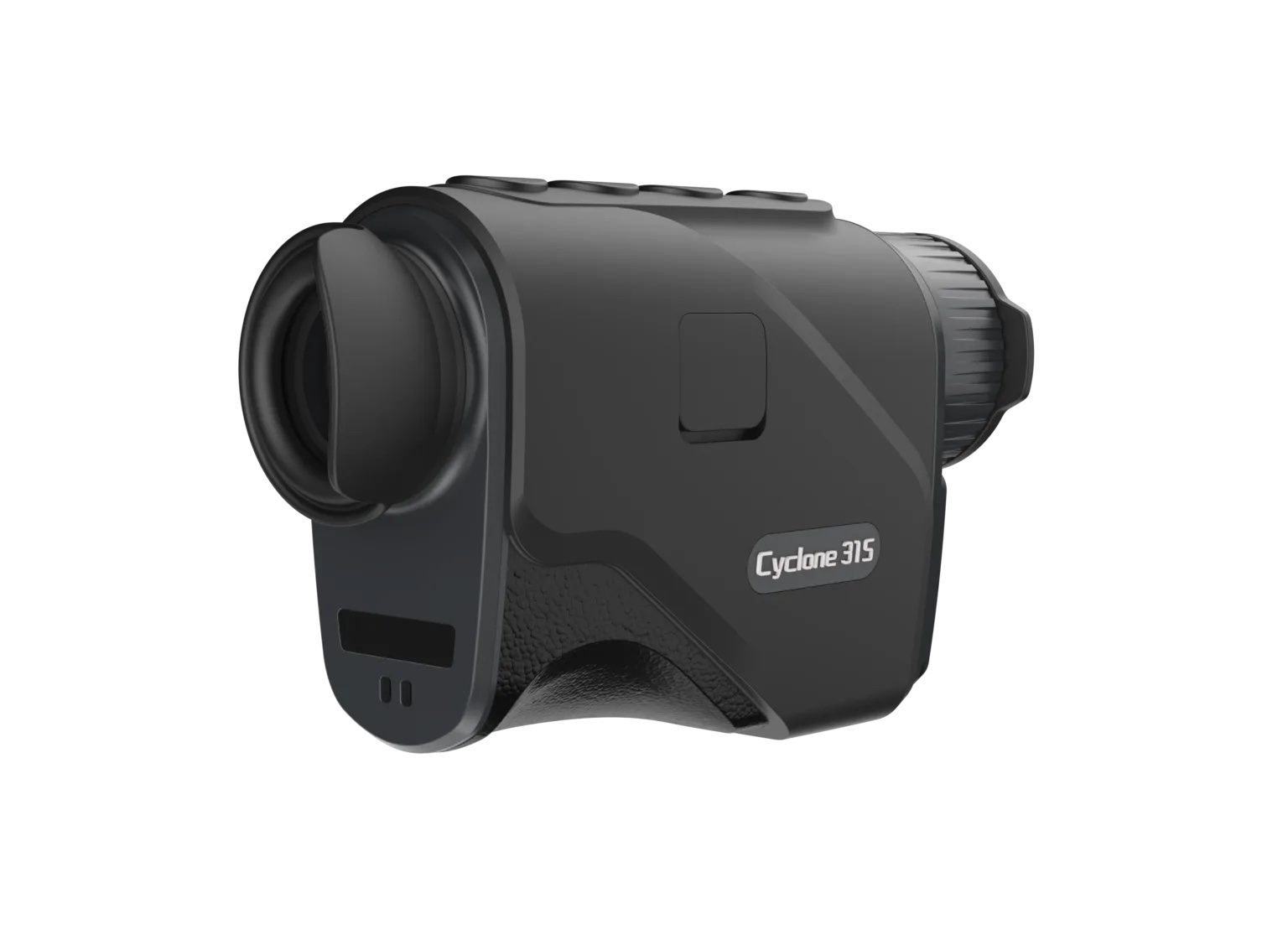
ThermTec Cyclone 315
The Cyclone 315 is the cheapest way into a 384×288 sensor in our range. At £599 (was £849) you get a 12µm, ≤20mK sensor behind a 15mm f/1.0 lens. That's more than double the pixels of a 256×192 model, for the same money as the Pard Leopard 256.
A 17.5° field of view at 1.4× magnification makes it a relaxed scanner for woodland and field margins. Battery life stands out, with replaceable lithium batteries rated at up to 10 hours. It boots in about 3 seconds, has 32GB of internal storage, and lets you switch between several colour palettes on its 0.39-inch OLED display.
Pulsar Axion Compact XQ19
For birding, garden wildlife and survey walks, how wide you can see matters more than how far. The Axion Compact XQ19 has the widest view in this guide: 19.5°, or 34.7 m across at 100 m, from a 19mm f/1.0 lens. A low 1.5× base magnification makes it quick to sweep a hedge, reedbed or tree line and pick out a warm shape.
The 384×288, 17µm sensor is rated <18mK, and detection is rated at up to 750 m. At 250 g it's also one of the lightest 384 models here. Pulsar's removable APS3 battery runs for up to 8 hours and is easy to swap in the dark. It records video with audio, connects to the Stream Vision 2 app, offers eight colour palettes and is IPX7 waterproof.
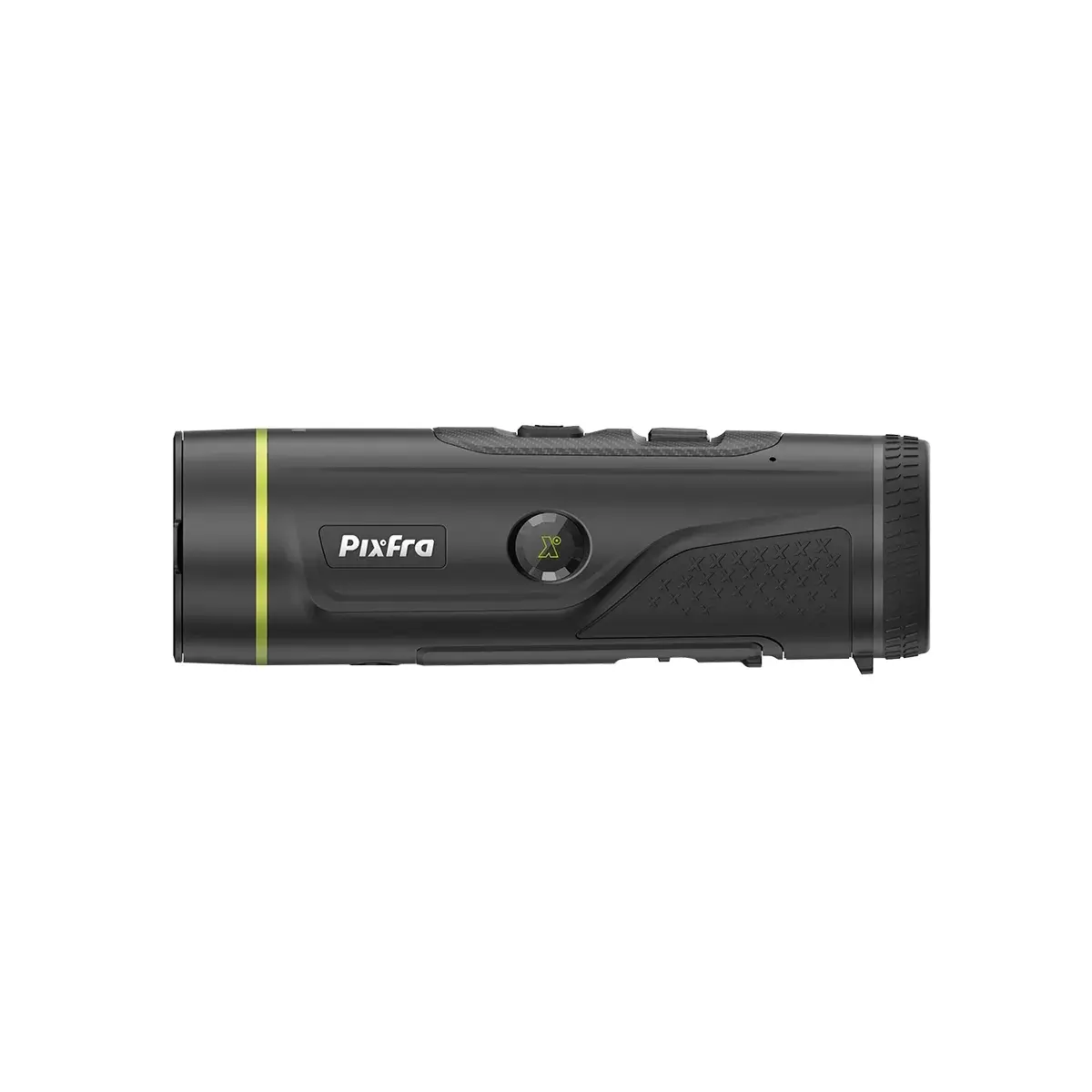
Pixfra Mile 3 M325
If you watch across fields, marshes or valleys, the Mile 3 M325 puts the most glass and sensitivity into a sub-£1,000 monocular. Its 25mm f/0.9 lens and ≤15mK sensor (Pixfra's figure at f/1.0) feed a 384×288 detector, rated to detect a heat source at up to 1,300 m. It covers 19.3 m across at 100 m with 1.8× base magnification, so it's still wide enough to scan comfortably.
The 1920×1080 OLED eyepiece is the sharpest display in this guide. It also has 64GB of storage and focuses down to 1 m for close-ups. Two 18650 cells come in the box, one fitted and one spare, each rated at up to 5.5 hours with Wi-Fi off. The body weighs ≤300 g without the battery and is IP67 rated.
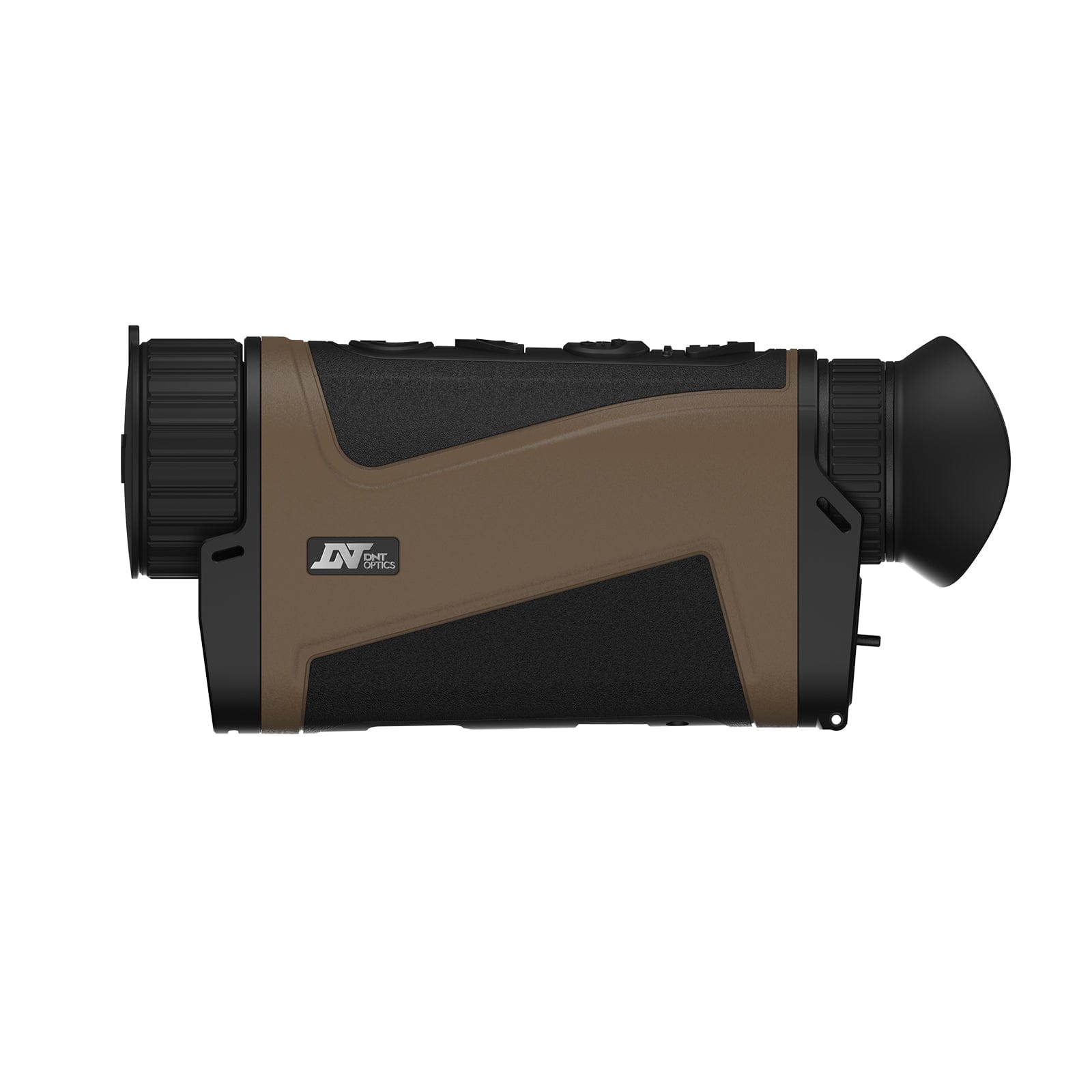
DNT Optics H325R HOUND
The H325R HOUND is the only monocular under £1,000 in this guide with a built-in laser rangefinder. It measures from 5 to 1,200 yards, which is handy when you need to log how far away an animal is, or judge whether it's worth moving closer.
The rest of the package is strong too. The 384×288, 12µm sensor is rated ≤18mK, behind a 25mm lens with 2.5× base magnification (up to 10× digital). The 1024×768 micro-OLED display is sharp, and the generous 25 mm eye relief makes it comfortable with glasses. It has 32GB of storage, four palettes (white hot, black hot, red hot and iron), 5.5 hours of rated battery life and USB-C charging.
Pard Leopard 256 (16mm)
The Leopard 256 takes a different route from the other 256 models. A 16mm lens gives 2.9× base magnification, the most of any 256 model here, with detection rated at up to 800 m. That makes it the better 256 choice for watching across open ground rather than at close range. The sensor is a 256×192, 12µm unit rated ≤25mK.
It comes with a 1024×768 OLED display, scene modes (City, Rain, Forest) and several palettes, 32GB of storage, and Wi-Fi with the PardVision2 app. A rechargeable 18650 battery is rated at 6 hours and charges over USB-C. It weighs 300 g and is IP67 rated.
Pulsar Axion XQ30 Pro
At £870 (normally £1,070), the Axion XQ30 Pro brings a 30mm f/1.2 lens to a compact Pulsar body. That's the longest lens in this guide, with detection rated at up to 1,050 m and a 13.3° field of view. It also has an 8-hour APS3 battery, picture-in-picture zoom, eight palettes, 16GB of recording with audio, the Stream Vision 2 app, IPX7 protection and Pulsar's 3-year warranty. It only falls under £1,000 while the offer lasts; at that price it's the strongest Pulsar for open-field watching.
View the Pulsar Axion XQ30 Pro – £870Budget tiers: what your money buys
Thermal monoculars under £500
You're buying a 256×192 sensor and a short lens, which is ideal for gardens, woodland edges and finding animals within a few hundred metres. The Pixfra Mile 2 M207 (£350) is the pick at its regular price. The Nocpix LUMI P13 (£398) adds zoom and sensitivity while its offer runs. The Pixfra Mile 2 M210 sits right on the line at £500.
If you've been searching for a cheap thermal monocular or a cheap thermal spotter, this is where you trade reach and fine detail for a low price. The image is clear enough to find and follow animals close by.
Thermal monoculars from £500 to £1,000
This is the sweet spot. Most models move up to a 384×288 sensor with bigger, faster lenses, so you can pick out shapes further away and zoom in with less loss of detail. Our picks: Cyclone 315, LUMI L19, H325R HOUND, Axion Compact XQ19 and Mile 3 M325.
Also in this band: Pixfra Mile 2 M215 (£580), M215M (£650), M413 (£800), M419 (£870) and M425 (£960), ThermTec Cyclone 325 (£749) and Infiray Iris IL35 (£950). Browse the full thermal monoculars range.
Just over £1,000
A little more buys Pulsar's wildlife-focused models. The Pulsar Wildlife Alaris XQ30 (£1,080) has a 384×288 sensor and a 1,050 m rated detection range. The Pulsar Axion XG30 (£1,130, was £1,390) moves up to a 640×480 sensor.
See the full Pulsar Wildlife thermal monoculars range.
How to choose a budget thermal monocular
256×192 or 384×288?
A 384×288 sensor has about 2.25 times as many pixels. That means more detail on distant animals and less blockiness when you use digital zoom. For close-range garden and woodland watching, 256×192 is plenty. If you scan fields or want to tell species apart at range, put your money into 384×288.
Lens size and field of view
A short lens gives a wide view and low magnification: you find animals quickly, but they look small. A longer lens narrows the view and makes distant animals bigger. Go wide for woods, gardens and birding, and longer for fields.
NETD: thermal sensitivity
NETD, measured in millikelvin (mK), is how small a temperature difference the sensor can show. Lower is better. It matters most in damp, foggy or mild weather, when animals and their background are close in temperature. Everything in this guide sits between ≤15mK and <35mK. Our guide to how sensor resolution and NETD affect image quality goes deeper.
Detection range vs what you can identify
Every rated range in this guide is the distance at which the monocular shows that a warm body is there. Telling a fox from a cat, or a roe from a muntjac, happens much closer. That's why lens size and sensor resolution matter more than the headline range when you compare models.
Battery: swappable or built-in
Models that take an 18650 cell or a Pulsar APS3 pack let you carry a spare and keep going all night. The M207's built-in battery is rated at 8.5 hours and recharges over USB-C. Cold nights shorten battery life on every model.
Warranty and UK support
Buying new from a UK dealer means the manufacturer warranty is in place, including 3 years on the Pulsar and DNT models listed here. Nocpix models also get 3 years, plus an extra year when you register the warranty with Nocpix, and you have someone to call if anything goes wrong.

Best thermal monocular for birding and garden wildlife
Birds and small mammals are small, often partly hidden and usually close. So for birding, roost checks and garden watching, field of view counts for more than range. Our top pick is the Pulsar Axion Compact XQ19, with its 19.5° view, 1.5× base magnification and 250 g weight. On a tighter budget, the Pixfra Mile 2 M207 gives an even wider 24° view for £350.
A thermal monocular is a finder. It shows you where the bird or mammal is, then you confirm the species with binoculars or by sound. For survey methods and the limits of thermal for counting birds and mammals, read our guide to thermal imaging in wildlife and birding surveys.
Thermal monocular or thermal binoculars?
Thermal monocular
- Smaller, lighter and much cheaper
- Quick to raise, scan and put away
- Budget models from £350
Thermal binoculars
- Two-eye viewing, more comfortable for long sessions
- Larger and heavier
- The cheapest in stock in our thermal binoculars range is £2,069
On a budget, a monocular for finding animals plus your normal binoculars for watching them is the most practical setup.
Close calls: which of two to choose
VSNocpix LUMI P13 vs LUMI L19
Same LUMI design, AMOLED display, 32GB storage and 3-year warranty (4 years when registered). The L19 (£696) moves to a 384×288 sensor and a 19mm lens, with 980 m rated detection against the P13's 670 m. The P13 (£398) has the longer battery life, 6 hours against 4.5. Choose the L19 if you watch beyond a couple of fields, or the P13 to save nearly £300.
VSAxion Compact XQ19 vs Axion XQ30 Pro
Both use a 384×288, 17µm sensor and an 8-hour APS3 battery. The XQ19 (£880) has a 19mm lens with a 19.5° view and weighs 250 g, so it's better close in. The XQ30 Pro (£870 on offer) has a 30mm lens with a 13.3° view and 1,050 m rated detection, so it's better across open ground.
VSPixfra M207 vs Nocpix LUMI P13
The M207 (£350) is wider (24° vs 13.5°) and runs longer on a charge (8.5 h vs 6 h). The P13 (£398) is more sensitive (≤20mK vs <35mK), adds 2× base magnification and a swappable battery, and roughly doubles the rated detection range (670 m vs 350 m). For a garden, choose the M207; for field edges, the P13.
Budget thermal monocular FAQs
What is the best budget thermal monocular in the UK?
The Nocpix LUMI L19 (£696, was £899) is the best all-rounder under £1,000, with a 384×288 sensor and a 19mm f/0.9 lens. Under £500, the Pixfra Mile 2 M207 (£350) is the best choice. For birding and close wildlife, choose the Pulsar Axion Compact XQ19 (£880). Prices checked 26 November 2026.
Is a 256×192 thermal monocular good enough?
Yes, for close-range use such as gardens, woodland edges and hedgerows. A 384×288 sensor has about 2.25 times as many pixels, so it shows more detail on distant animals and holds up better when you zoom in.
How far can a budget thermal monocular see?
Rated detection ranges in this guide run from 350 m (Pixfra Mile 2 M207) to 1,300 m (Pixfra Mile 3 M325). These are manufacturer figures for spotting a heat source. Recognising the animal happens at a shorter distance.
Is a thermal spotter the same as a thermal monocular?
Yes. In the UK, "thermal spotter" is the everyday name for a handheld thermal monocular used to find animals before you watch them through binoculars.
Do thermal monoculars work in daylight?
Yes. They detect heat, not light, so they work day and night. Contrast can drop on warm sunny days, when the ground and vegetation heat up close to an animal's temperature.
Can a thermal monocular see through glass or walls?
No. Ordinary glass blocks thermal infrared, and walls block it completely. A thermal monocular shows the surface temperature of whatever is in front of it, so use it outdoors or through an open window.
How long do thermal monocular batteries last?
The models in this guide are rated from 4.5 hours (Nocpix LUMI L19) to up to 10 hours (ThermTec Cyclone 315). Models that use a replaceable 18650 cell or a Pulsar APS3 pack let you carry a spare. Cold weather shortens battery life.
Should I buy a used thermal monocular to save money?
A new monocular comes with the full manufacturer warranty (3 years on the Pulsar and DNT models here, and 4 years on Nocpix once you register it) and UK support. With entry models now from £350 new, the saving from buying used is often small.
Find your thermal monocular
Browse our full range, or tell us your budget and where you watch wildlife and we'll help you choose. Finance is available, subject to status.