


Sytong Night Vision

Our Sytong collection centres on the HT-70 LRF, a digital night vision scope. It is a standalone riflescope: it captures and displays its own night image, rather than working behind a separate day scope or forming its picture from heat. LRF stands for laser rangefinder, a distance-measuring function. You will find the scope in the product card below, and the guide underneath explains how its format compares with other night-viewing options.
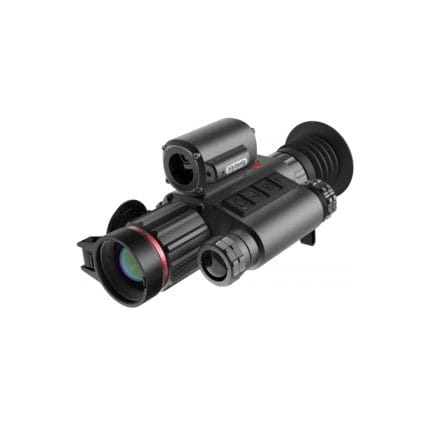
Sytong HT-70 LRF Night Vision Scope
Original price was: £569.99.£549.99Current price is: £549.99.Choosing a night-viewing format
Night-viewing set-ups differ in two separate ways: the technology that forms the image and the physical form the device takes. Thermal imaging, for example, comes in several forms. The approaches below compare common choices, and the HT-70 LRF follows the first: a standalone, dedicated scope.
- Standalone digital night vision scope: a single unit that forms the night image and serves as the sight. Sytong groups the HT-70LRF with its night vision rifle scopes, and its manual shows a complete standalone body with its own eyepiece.
- Rear add-on: a night vision unit used behind a separate day scope, so a day optic remains part of the setup. If you prefer that approach, browse our night vision add-ons.
- Thermal imaging: a device that builds its picture from the heat objects emit, rather than from reflected light. It is a different technology from digital night vision, not a stronger version of it.
Choose the standalone format when you want one dedicated night scope. To compare it with other dedicated night vision scopes, explore our wider night vision range.
Infrared and rangefinding: two separate functions
Sytong's HT-70LRF manual labels both an IR illuminator and a ranging module on the scope. They do quite different jobs.
Digital night vision forms its image from light reflected by the scene. In very dark conditions an IR illuminator adds infrared light for the scope to work with, and the manual describes IR illumination as part of the scope's viewing modes. The illuminator helps create the picture; it does not detect heat.
The laser rangefinder measures distance. It works alongside the image rather than forming it, so judge it separately from how the night picture looks.
Sensor and display: reading the specification
A digital night vision scope captures the scene on a sensor, processes that signal and shows the result on a small display that you view through the eyepiece. Capture and display are separate stages, and each has its own specification. When you compare night vision scopes, read sensor and display figures as distinct fields rather than treating one headline resolution as the whole story.
Sytong night vision questions
Is the Sytong HT-70 LRF a thermal scope?
No. It is a digital night vision scope, which works with light reflected from the scene, including infrared light. A thermal scope forms its image from heat given off by objects. The two use different image sources, so if a heat-based picture is what you are after, a thermal optic is the format to look at.
Is the HT-70 LRF a rear add-on for my day scope?
No, it is a scope in its own right. It forms its own image and serves as the sight, whereas a rear add-on is used behind a separate day scope. Your choice comes down to whether you want a single dedicated night unit or prefer to keep a day optic in the setup.
What does LRF mean on the HT-70 LRF?
LRF stands for laser rangefinder. It gives a distance reading to something in view. It does not form or sharpen the night image, so treat it as an extra measuring function on top of the scope's viewing role.
Why does infrared illumination matter for digital night vision?
Digital night vision needs some light to build an image, and in darkness there may be very little. An IR illuminator adds infrared light to the scene, and the scope can use the infrared light reflected back to form its image. It is a light source, not a heat detector.
Are sensor resolution and display resolution the same specification?
No. The sensor records the scene and the display shows the processed result, so the two figures describe different stages. A display figure tells you about the screen you look at, not on its own how much scene detail the sensor captures. Compare each against the same figure on other scopes.
Viewing the HT-70 LRF
For the scope's specification and price, open the Sytong HT-70 LRF Night Vision Scope product page.