
Senopex Thermal Riflescopes

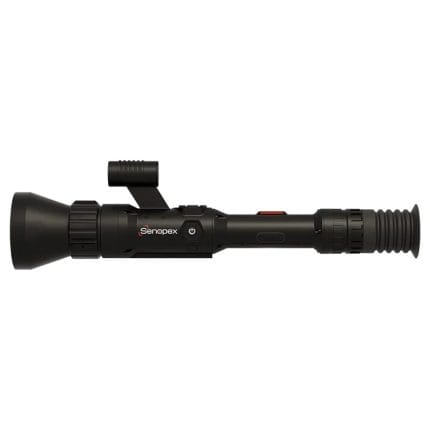
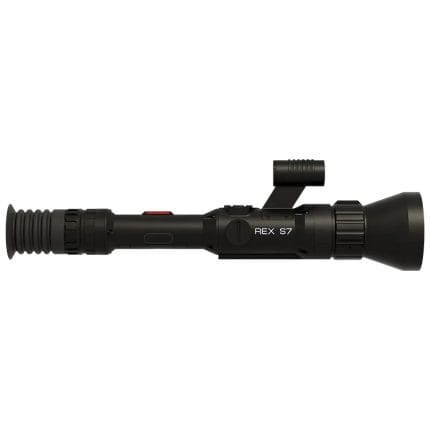
Our Senopex thermal riflescopes come from the REX family: the REX A7 LRF and the REX S7 LRF. Both are thermal scopes that form their image from heat. The main choice between them is the view: the S7 starts at a lower base magnification with a wider field of view, while the A7 starts at a higher base magnification with a narrower one. Compare both in the product cards below.
A7 or S7: wider view or larger starting image
Senopex's REX specification gives each model its own combination of detector, field of view and base magnification. In practice, that creates a clear trade-off.
- REX S7 LRF: the wider field of view and lower base magnification. You take in more of the scene at once, which helps when scanning open ground or keeping a moving subject in view.
- REX A7 LRF: the higher base magnification and narrower field of view. The image starts larger, which suits looking more closely at a subject you have already found, with less of the surroundings in view.
Read base magnification together with the detector and field of view, because all three shape what you see. Then think about where you spend most of your time: searching a wide area points towards the S7, while a larger starting image points towards the A7.
REX identity and rangefinding
Senopex uses similar model letters in more than one family, including its DOT range. A DOT S7 and a REX S7 are different products, so match the full family and model name before relying on a review or specification. Both scopes here are REX models.
LRF refers to laser rangefinding, which measures distance. It is a separate function from the thermal image: the rangefinder gives you a distance, and the thermal core forms the picture. Senopex describes the REX rangefinder as a detachable magnetic module offered as an option across the family, so treat rangefinding as its own item when you compare packages, alongside the thermal specifications.
To weigh Senopex against other makers, browse our full thermal riflescope range. When you have chosen between the two REX models, open its product page for the specification and price.
Senopex REX questions
What is the practical difference between the REX A7 and the REX S7?
It comes down to breadth of view against starting image scale. The S7 shows more of the scene at a lower base magnification. The A7 shows a narrower area at a higher base magnification. Choose the S7 if seeing more at once matters most, and the A7 if you would rather begin with a larger image.
Does a review of the Senopex DOT S7 describe the REX S7?
Not automatically. DOT and REX are separate Senopex families, so a DOT S7 review describes a different scope from the REX S7. Look for reviews and specifications that name the REX family and the exact model before applying them to your choice.
Does a thermal REX scope need infrared light to create its image?
No. A thermal scope builds its picture from the heat that objects give off, so it does not need an illuminator to form its thermal image. Illuminators help devices that work from reflected light, such as digital night vision scopes.
What does LRF add to a thermal riflescope?
A distance reading. The laser rangefinder measures how far away something is, while the thermal core produces the image. Rangefinding does not sharpen the picture or make a subject easier to identify, so weigh it as an extra measuring function rather than an imaging upgrade.
Is a detection distance the same as an identification distance?
No. Detection means noticing that something is there, while recognising or identifying it needs considerably more detail. Each task depends on the whole system and on conditions at the time. When you see a distance quoted for a thermal optic, find out which task it refers to before you compare it with another figure.