
Falcon Thermal & Night Vision Scopes

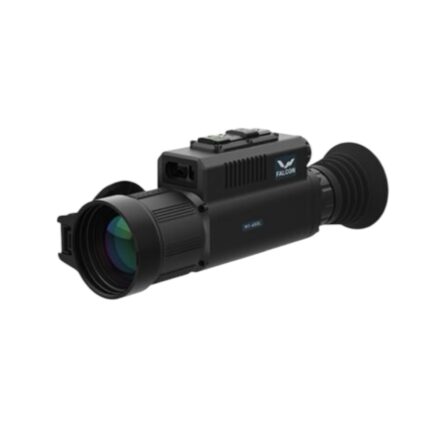
Our Falcon scopes cover two different ways of seeing at night. The Falcon Dark Night Vision Riflescope is a digital night vision scope that builds its picture from light reflected by the scene. The Falcon Medusa M1-650L Thermal Scope builds its picture from the heat that objects give off. Decide which kind of image suits your task, then compare both scopes in the product cards below.

Night vision or thermal: choose the image first
The Falcon Dark and Medusa are offered here as riflescopes, and the clearest difference between them is the technology that forms the picture.
| Scope | Image source | What the picture shows | A good fit if |
|---|---|---|---|
| Falcon Dark (digital night vision) | Light reflected from the scene, captured by a digital sensor and presented on a display | Surfaces, outlines and shapes as the available light reveals them | You want a view that looks like a lit picture of the scene |
| Falcon Medusa M1-650L (thermal) | Heat given off by objects, captured by a thermal detector and presented on a display | Temperature differences, so warmer subjects stand out from cooler surroundings | Picking out heat sources against their background is your priority |
If the reflected-light picture suits the way you work, browse our wider night vision range to weigh the Dark against other options. If heat contrast matters more, our thermal rifle scopes give you more heat-based scopes to compare with the Medusa.
Compare like with like
When you read reviews, manuals or specification sheets, search with the full model name, Medusa M1-650L, so the information matches this scope rather than a different Medusa revision. Compare figures at the same stage of the image as well: thermal detector against thermal detector, and display against display.
Falcon thermal and night vision scope FAQs
What is the difference between the Falcon Dark and the Medusa M1-650L?
They answer different questions about the scene. The Dark is a digital night vision scope, so its picture is made from light bouncing off the scene and resembles a lit view of it. The Medusa M1-650L is a thermal scope, so its picture maps heat, with warm subjects contrasting against cooler surroundings. Choose the Dark if visual appearance matters most, and the Medusa if heat contrast is the priority.
Do both scopes need an infrared illuminator?
Not in the same way. A digital night vision scope works from reflected light, so in very dark conditions it needs some light reaching the scene. An infrared illuminator can provide that light, and the scope uses the infrared light reflected back to form its picture. A thermal scope forms its image from the heat that objects give off, so it does not need an illuminator to produce that thermal image. If you lean towards the Dark, think about how you will light very dark scenes as part of your setup. With the Medusa, heat contrast is what you are comparing instead.
Is sensor resolution the same as screen resolution?
No. The sensor or detector captures the image and the display shows it to your eye, so the two figures describe different stages. A higher-resolution screen can present the picture more finely, but it cannot add detail that was never captured. A screen figure therefore tells you about viewing, not about how much the scope captured.
Does a quoted detection range mean I can identify what I see?
No. Detection means noticing that something is there. Recognising the type of subject and identifying it each take progressively more detail. How much detail reaches you depends on the device, the distance, the subject's size and contrast, and the conditions on the day, so a detection figure describes only the first step. Use range figures to compare devices measured the same way, not as a promise of what you will identify.
Is the Medusa M1-650L the same as the Medusa M1 V2.0?
Falcon presents them as separate models: its own site gives the M1 V2.0 a separate entry and a separate manual. The scope in our range is the Medusa M1-650L, so rely on specifications and reviews written for the M1-650L itself. If you find a figure quoted simply for a Medusa M1, confirm it refers to the M1-650L before using it in a comparison.